Luxury Hair Extensions Maintenance Guide
Table of Contents
- Why Maintenance Matters for Luxury Hair Extensions
- How to Wash Hair Extensions Without Damage
- Hair Extension Brushing Tips for Tangle Prevention
- Creating Your Hair Extension Maintenance Schedule
- Hair Extensions for Thinning Hair: Special Considerations
- Common Maintenance Mistakes and How to Avoid Them
- When to Schedule Professional Maintenance
- Frequently Asked Questions
Last Updated: October 13, 2026
Why Maintenance Matters for Luxury Hair Extensions
Your natural hair and extensions are a team, and hair extensions maintenance is what keeps them working together. They work together. When you maintain them properly, they thrive. When you skip steps, both suffer.
I've spent 17 years working with hair. What I've learned is this: the extension method matters less than what happens after installation. A $2,000 integration system fails without care. A well-maintained system transforms how you feel about your hair.
Maintenance isn't complicated. It's consistent. Think of it like brushing your teeth. You wouldn't skip brushing for a week, then brush aggressively to catch up. Hair extensions work the same way. Small, regular actions prevent big problems.
Here's what proper maintenance does: it protects your natural hair from excess tension. It keeps extensions from matting or tangling. It extends the life of your investment. And it keeps your hair looking fresh between appointments at my Lancaster studio.
How to Wash Hair Extensions Without Damage
Washing extensions incorrectly causes more damage than not washing them at all. The goal is to cleanse gently without disrupting the bonds or stressing your natural hair.
Most people wash their extensions like they wash regular hair. That's the problem. Extensions need a different approach. The bonds, whether K-tip, tape-in, or weft, need protection. Your natural hair at the attachment points needs support.
Water Temperature and Product Selection
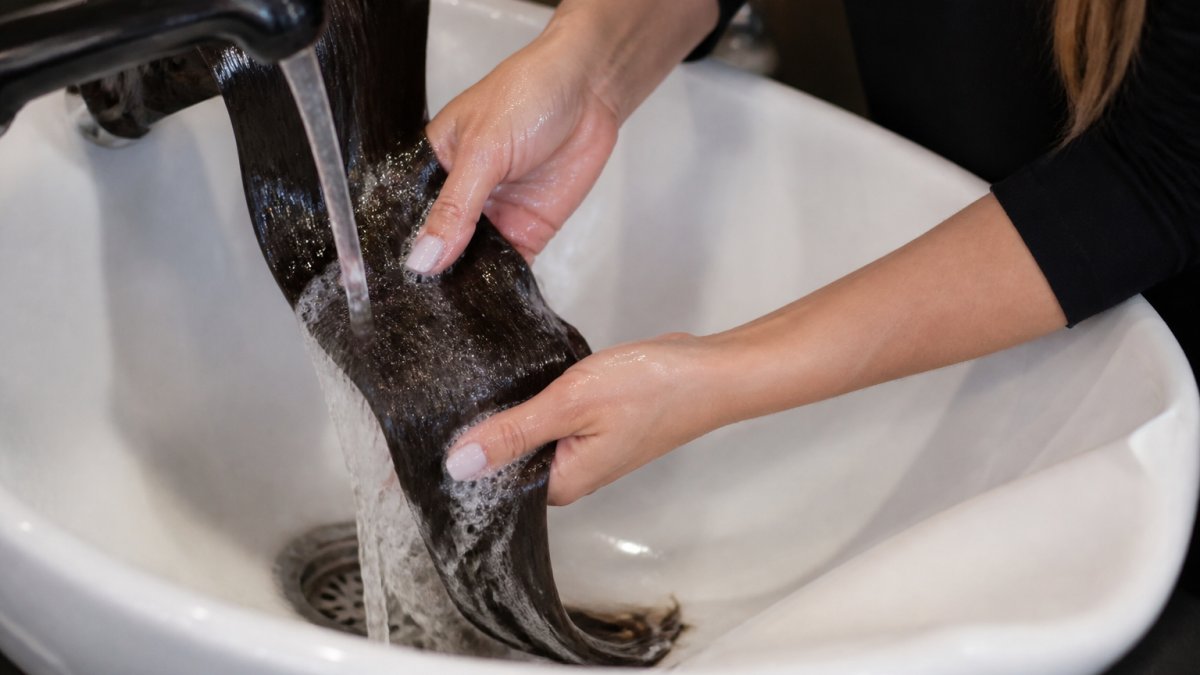
Cool water is non-negotiable. Warm water opens the cuticle and can weaken bonds over time. Cool water seals the cuticle and protects the extension structure.
Your products matter too. Use sulfate-free, extension-safe shampoo and conditioner. Sulfates strip moisture and break down bonds. If you're unsure whether your current products are safe, ask during your consultation at Conceited Beauty Bar.
Avoid heavy oils and silicones near attachment points. They can cause slipping. Lightweight, water-based products work better for extensions than thick creams.
Step-by-Step Washing Process
Step 1: Prepare your hair Brush gently before washing. Start at the ends. Work upward slowly. Detangle dry hair rather than wet hair, which is more fragile.
Step 2: Rinse with cool water Start at the top. Let water run downward. Don't pile your hair on top of your head. Keep the hair extended and flowing.
Step 3: Apply shampoo Use a small amount. Focus on your scalp and roots. Avoid direct scrubbing at attachment points. Let the shampoo run down as you rinse, rather than rubbing it in.
Step 4: Rinse thoroughly Incomplete rinsing leaves product buildup. This weighs extensions down and dulls them. Rinse until the water runs clear.
Step 5: Apply conditioner Apply from mid-length downward. Avoid the scalp. Leave it on for 1-2 minutes. Rinse with cool water.
Step 6: Dry gently Squeeze excess water with your hands. Don't wring or twist. Use a microfiber towel or t-shirt to blot. Rough towels create frizz and tangling.
Hair Extension Brushing Tips for Tangle Prevention
Tangles are the enemy of extension longevity. They mat the hair. They stress the bonds. They're also preventable.
Brush your extensions daily. Use a wide-tooth comb or extension-specific brush. Never use a regular paddle brush on wet extensions. The bristles catch and pull.
Start at the ends. Hold the hair above the tangle so you don't pull on the root. Work upward in small sections. This takes longer than rough brushing, but it works.
Brush before you wash. Brush before bed. Brush when you notice any tangles forming. Catching tangles early stops them from becoming mats.
Sleep matters too. Braid your hair or put it in a loose bun before bed. This prevents friction and tangling while you sleep. If you have tape-in extensions, avoid sleeping on that side repeatedly, as it can cause tension on the bonds.
| Maintenance Task | Frequency | Why It Matters |
|---|---|---|
| Gentle brushing | Daily | Prevents tangles and matting |
| Cool-water wash | Every 7-10 days | Cleanses without weakening bonds |
| Deep conditioning | Every 2-3 weeks | Restores moisture and softness |
| Professional maintenance | Every 4-8 weeks | Checks bond integrity and natural hair health |
Creating Your Hair Extension Maintenance Schedule
Consistency beats intensity, and that's the foundation of effective hair extensions maintenance. A simple routine you follow every day works better than occasional deep treatments.
Daily actions:
- Brush gently in the morning and evening
- Sleep in a braid or loose bun
- Avoid excessive heat styling
Weekly actions:
- Wash with cool water and extension-safe products
- Deep condition once a week
Monthly actions:
- Schedule a professional assessment
- Evaluate how your natural hair feels under the extensions
Think of this schedule as non-negotiable. Your extensions depend on it. Your natural hair depends on it.
I recommend coming in for professional maintenance every 4 to 8 weeks, depending on your extension type and natural hair condition. During these visits, I assess how your hair is responding. I check bond integrity. I make adjustments if needed. This is where I catch problems before they become costly.
Hair Extensions for Thinning Hair: Special Considerations
If you're managing thinning hair or density changes, extensions require extra attention. Your natural hair is already working harder to support its own weight. Adding extensions means being intentional about placement and weight distribution.
The method should fit your hair, not the other way around. If you have fine, fragile hair, heavy K-tip extensions might not be appropriate. Lighter tape-in extensions or a custom topper might be better choices. This is exactly what I evaluate during your initial consultation.
Placement matters enormously. I never place extensions in areas where your natural hair is too thin to support them safely. That causes breakage and worsens density loss. Instead, I focus extensions in areas where you have adequate density. I use custom toppers or meshless integration to add coverage where your natural hair is sparse.
Maintenance becomes even more critical with thinning hair. Gentleness isn't optional. It's essential. Skip the heavy products. Avoid excessive heat. Brush with patience, not speed.
Common Maintenance Mistakes and How to Avoid Them
Mistake 1: Washing too frequently Washing every day strips moisture and stresses bonds. Stick to every 7-10 days unless you have a specific reason for more frequent washing.
Mistake 2: Using hot water Hot water weakens bonds and frizzes extensions. Cool water is your standard. Lukewarm is acceptable if cool feels uncomfortable, but avoid anything warm.
Mistake 3: Sleeping with wet hair Wet hair tangles easily. It puts tension on bonds while they're in a vulnerable state. Always dry your hair before bed.
Mistake 4: Brushing aggressively Speed creates damage. Patience prevents it. Spend time on your routine. Your extensions will last longer.
Mistake 5: Skipping professional maintenance You can't assess everything yourself. I check things you can't see. I catch problems early. Regular professional care prevents expensive repairs.
Mistake 6: Using the wrong products Not all "hair products" are extension-safe. Sulfates, heavy silicones, and alcohol-based products damage extensions. Ask your specialist what they recommend.
When to Schedule Professional Maintenance
Professional maintenance isn't optional. It's preventive care.
I recommend appointments every 4 to 8 weeks, depending on your extension type. K-tip and weft extensions might go 6-8 weeks. Tape-in extensions and toppers often need adjustment every 4-6 weeks as your natural hair grows.
During these appointments, I assess:
- How your natural hair is responding to the extensions
- Whether bonds are intact and properly positioned
- If any adjustments are needed
- What your maintenance routine is doing right or wrong
I also refresh your extensions. Tape-in extensions need repositioning as your hair grows. K-tip extensions may need touch-ups if any bonds have loosened. Toppers need cleaning and styling adjustments.
This is your chance to ask questions and troubleshoot. If something feels wrong between appointments, reach out. Small problems caught early stay small.
Maintaining luxury hair extensions is about respect. Respect for your natural hair. Respect for the investment you've made. Respect for how you want to feel.
If you're in Lancaster and navigating thinning hair, density changes, or just wanting more fullness, I'd like to help you evaluate whether extensions are right for you. At Conceited Beauty Bar, I work one-on-one with each client to design a plan that fits your natural hair, your lifestyle, and your expectations. Begin your discovery with a private consultation where we assess your hair together and discuss which method, whether K-tip extensions, tape-in extensions, custom toppers, or our meshless integration system, makes sense for your situation.
Frequently Asked Questions
How often should you wash luxury hair extensions?
I recommend washing extensions every 7-10 days, depending on your lifestyle and how much product buildup occurs. If you're swimming, exercising frequently, or using styling products daily, you may need to wash more often. The key is listening to how your hair feels, when it loses its movement or feels heavy, it's time to cleanse. Washing too frequently strips natural oils; washing too infrequently allows product and sweat to accumulate at the attachment points, which can weaken your natural hair over time.
Can you use regular shampoo and conditioner on hair extensions?
Not all regular products work well with extensions. Avoid sulfate-heavy shampoos and conditioners with silicones or oils that build up on the hair and weigh it down, especially at attachment points. Look for sulfate-free, lightweight formulas designed for extensions or color-treated hair. The gentler the product, the longer your extensions will last. When you're unsure, I'm happy to recommend products during your consultation that will work best with your specific extension method.
How should you sleep with hair extensions to prevent matting?
Before bed, gently brush through your extensions with a wide-tooth comb or extension brush, starting at the ends and working upward. Braid your hair loosely or use a silk or satin pillowcase, cotton pillowcases create friction that causes tangling and matting. If you have weft or integration-based extensions, pay special attention to the areas near attachment points, as these are most prone to matting overnight. A loose braid or low ponytail also helps prevent friction while you sleep.
Can hair extensions be safely maintained on thinning hair?
Yes, but it requires careful planning and the right method. Extensions can absolutely work for thinning hair when the method is fitted to what your natural hair can safely carry. This means assessing your hair's density, texture, and strength before choosing between K-tip, tape-in, or integration methods. Lighter attachment points, strategic placement, and realistic expectations about weight and tension are essential. During your consultation, I evaluate your natural hair's condition and recommend only the methods that will protect your integrity while giving you the coverage and fullness you want.