Managing Autoimmune Hair Loss: Cosmetic Solutions
Table of Contents
- What Autoimmune Hair Loss Looks Like Cosmetically
- Understanding Your Role: Medical Care vs. Cosmetic Planning
- Hair Toppers for Thinning Hair: When and How They Work
- Cosmetic Options for Patchy Hair Loss
- Extensions for Thinning Hair: Assessment and Safety
- Meshless Integration for Hair Toppers and Coverage
- The 6-Cause Restoration Method: Your Cosmetic Consultation Framework
- Building Your Plan: Hair Integrity Comes First
- Frequently Asked Questions
Last Updated: October 12, 2026
What Autoimmune Hair Loss Looks Like Cosmetically
When you're managing autoimmune hair loss, what you see in the mirror often matters more than the medical label. I've worked with many women in Lancaster who notice changes in density, patchy areas, or visible scalp where there used to be full coverage. These cosmetic shifts can feel sudden and disorienting, even when you're already under a dermatologist's care for the underlying condition.
Autoimmune-related hair loss belongs in the hands of a physician or dermatologist. That's where diagnosis and medical treatment happen. My role is different. I help you plan for coverage, assess what your natural hair can safely carry, and build a cosmetic strategy that works with the density you have right now.
What does that look like in practice? You might notice thinning at your part line. Your crown may feel less full. Some women describe patchy areas or uneven density across the scalp. Others see shedding that changes the overall weight and movement of their hair. None of these observations diagnose anything, but they all shape how I approach managing autoimmune hair loss solutions with you.
The key insight is this: cosmetic planning isn't about waiting for regrowth. It's about working with what's present today and creating coverage that feels authentic and sustainable for your lifestyle.
Understanding Your Role: Medical Care vs. Cosmetic Planning
Here's where the distinction matters most. Your dermatologist or medical provider handles diagnosis and treatment protocols. I handle the cosmetic experience, how your hair looks, feels, and functions day to day.
If you're on medication, managing an autoimmune condition, or exploring medical options, that's essential work happening in a clinical setting. I don't recommend, adjust, or advise on medications, supplements, steroid treatments, or medical regrowth protocols. That's not my scope.
What I do is evaluate your current hair density and assess what cosmetic tools will work best for you. I consider your lifestyle, maintenance tolerance, and what your natural hair can safely support. I help you understand whether extensions, a topper, or a combination approach makes sense for your specific situation.
This separation is important. You need both perspectives working in parallel. Medical care addresses the underlying condition. Cosmetic planning addresses how you feel and look while you're managing that condition.
Hair Toppers for Thinning Hair: When and How They Work
A hair topper is a removable hairpiece designed to add density and coverage where your natural hair has thinned. Unlike a full wig, a topper clips or integrates into your existing hair, blending with what you already have.
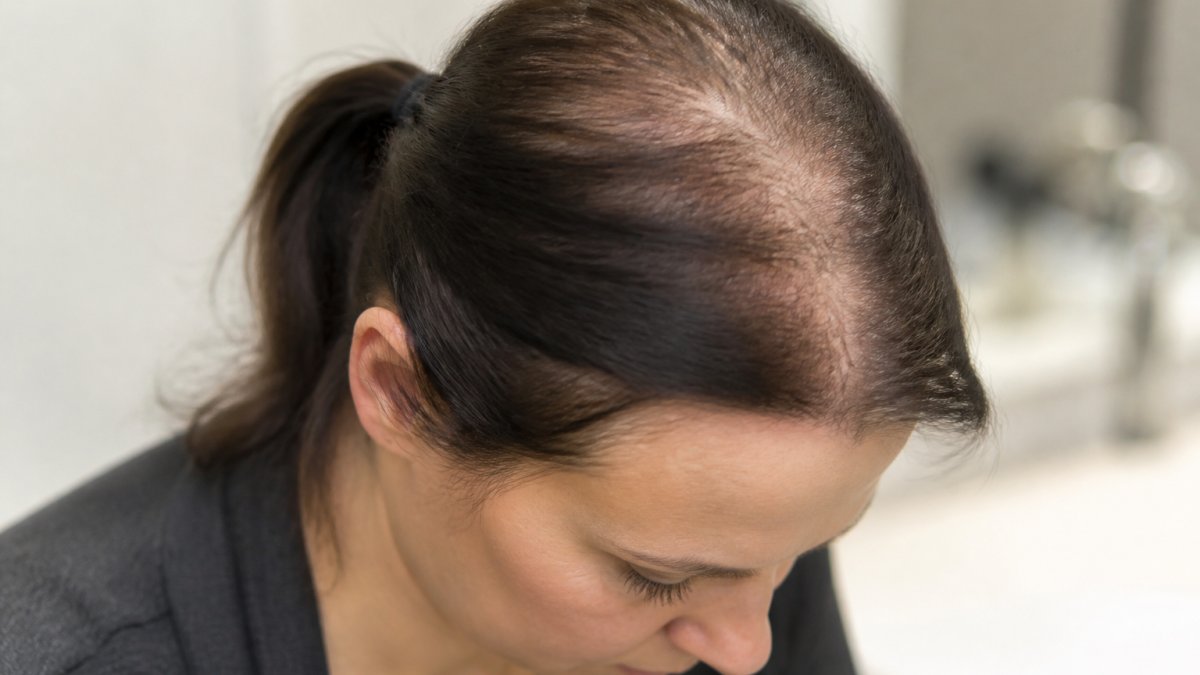
Toppers work best when you have enough hair to anchor them and blend them. If your density is moderate to low but not completely absent, a topper can add fullness without requiring a full hairpiece. The right topper feels like an extension of your own hair, not a separate unit sitting on top.
When considering a topper for managing autoimmune hair loss solutions, I evaluate several things:
- How much density you have in the area needing coverage
- Whether your natural hair can safely support the weight
- Your daily routine and maintenance tolerance
- How the topper will blend with your natural color and texture
- Whether you prefer a removable option or something more integrated
Not every person is a candidate for a topper. If your hair is very fine or fragile, the weight might create tension you don't want. If you have significant patchy loss, a topper alone might not provide the coverage you're looking for. That's where the assessment conversation matters.
Cosmetic Options for Patchy Hair Loss
Patchy loss creates a specific cosmetic challenge. You have areas of fuller density next to areas of visible scalp. A single solution often doesn't work because the problem isn't uniform across your head.
This is where combinations make sense. You might use a strategic haircut to work with your natural density in some areas. You might add a topper for crown coverage. You might consider extensions in specific zones where your hair can safely carry the weight.
The goal is to create an illusion of even density without overloading fragile or thin areas. Some women find that a lace closure, a hairpiece that covers the part area, solves the visible-scalp problem without needing full coverage everywhere.
I also consider color. If your natural hair can tolerate it, a lived-in color technique can create the visual effect of denser hair by adding depth and dimension. That's a cosmetic tool that costs nothing in terms of hair integrity, as long as your hair is healthy enough for color.
The wrong approach is forcing one method to do all the work. Extensions won't hide patchy loss if they're placed over sparse areas. A topper won't blend if the edges don't match your natural density. Cosmetic planning for patchy loss means layering options strategically.
Extensions for Thinning Hair: Assessment and Safety
Extensions can add length and fullness, but only when your natural hair can safely support them. This is where my philosophy, the method fits the hair, not the other way around, becomes critical.
If your hair is fine, fragile, or already compromised by shedding, heavy extensions create tension that causes more damage. I've seen women come to me after extensions made their thinning worse because the weight and installation method weren't matched to their hair's capacity.
The assessment starts with honest evaluation. I look at your hair's diameter, elasticity, and current condition. I consider where you're shedding and whether adding weight to those areas makes sense. I ask about your lifestyle, how much heat styling, how often you wash, whether you're traveling or under stress.
Tape-in extensions and K-tip extensions are the methods I typically consider for thinning hair because they distribute weight across multiple points rather than concentrating it in one spot. Weft extensions can work too, depending on placement and your natural density.
The key is this: not every woman with thinning hair should get extensions. Some need a topper. Some need a combination of strategies. Some need to focus on hair health first before adding any weight or tension.
Meshless Integration for Hair Toppers and Coverage
Meshless Integration is an installation method that anchors a topper or hairpiece directly to your natural hair without a mesh base. Instead of a traditional topper that clips in, a meshless system creates a more integrated, seamless look.
How it works: I integrate the topper into your natural hair using a technique that blends the edges so completely that there's no visible line where your hair ends and the topper begins. The topper becomes part of your hairstyle rather than sitting on top of it.
This method is especially useful when you're managing autoimmune hair loss solutions and want something that feels permanent but stays removable. You can take it off for washing and sleeping, but during the day, it looks like all your own hair.
Meshless Integration requires enough natural hair density to anchor the topper securely. If your density is very low, this method might not provide enough grip. That's where the assessment conversation determines whether it's right for you.
The advantage is comfort and confidence. You're not adjusting a clip throughout the day. You're not worried about visibility. You have coverage that moves and feels natural because it's integrated with your actual hair.
The 6-Cause Restoration Method: Your Cosmetic Consultation Framework
The 6-Cause Restoration Method is how I structure every consultation. It's not a diagnostic system. It's a framework for understanding your specific situation and building a plan that fits.
The six causes are:
- Hormonal changes (perimenopause, menopause, postpartum)
- Autoimmune conditions and related hair loss
- Medication side effects (including GLP-1 medications)
- Genetic or pattern thinning
- Lifestyle and stress factors
- Trauma, trichotillomania recovery, or damage from previous treatments
When you come in, I listen for which of these contexts apply to you. One woman might be navigating autoimmune hair loss plus hormonal shifts. Another might be managing GLP-1 side effects with genetic thinning underneath. Understanding your context helps me recommend cosmetic solutions that actually fit your life.
This framework keeps me focused on what matters: your current density, your lifestyle, your maintenance tolerance, and what your hair can safely carry. It's not about pushing one method. It's about finding the right combination for you.
Building Your Plan: Hair Integrity Comes First
Every decision I make starts with one principle: will this protect or compromise your natural hair?
That means I might recommend against extensions if your hair isn't ready. It means I might suggest a topper instead of a full integration system. It means I consider the weight, tension, placement, and maintenance of any method before recommending it.
Building your plan also means being honest about what's realistic. If you have very low density, a full head of long extensions isn't the answer. If you're shedding actively, adding weight might make things worse temporarily. If you travel constantly, a high-maintenance integration system might frustrate you.
What I do is ask questions, listen carefully, and propose a plan that respects your hair's integrity while giving you the coverage and confidence you want. That might mean starting with one method and adding another later. It might mean focusing on a strategic cut and color first, then adding extensions once your hair stabilizes.
Managing autoimmune hair loss solutions is a conversation, not a prescription. I'm here to help you navigate it with clarity and realistic expectations.
Frequently Asked Questions
What cosmetic options can help with the appearance of autoimmune-related hair loss?
Depending on your current density and coverage needs, options include strategic haircuts and styling, removable toppers, lace closures, full lace units, and extensions when appropriate. Some clients benefit from combinations of these approaches. The right choice depends on how much coverage you need, where the loss is most visible, your lifestyle, and what your natural hair can safely support. During a consultation, I assess your specific pattern and density to recommend what will give you the coverage and length you want while protecting your hair integrity.
How do hair toppers for thinning hair differ from extensions?
A topper is a separate hairpiece that clips or integrates onto your existing hair to add coverage and density where you need it most, usually at the crown or part area. Extensions are attached directly to your natural hair to add length and fullness throughout. Toppers are removable and require no commitment to your natural hair; extensions are semi-permanent and require your natural hair to be strong enough to carry the added weight. For autoimmune-related thinning, toppers are often the safer choice because they don't place tension on fragile areas.
What should I expect during a cosmetic hair consultation for managing autoimmune hair loss?
I'll evaluate your current density, the pattern and location of thinning, your natural hair texture and color, your lifestyle, and your aesthetic goals. I'll assess what your natural hair can safely carry and discuss realistic expectations for coverage. I use my 6-Cause Restoration Method as a framework to understand your situation and recommend options tailored to you. This is a cosmetic consultation only, medical diagnosis and treatment belong with your dermatologist. I focus on what we can do to restore the look and feel you want.
Can Meshless Integration work with a topper if I have patchy hair loss?
Yes. Meshless Integration is an installation method that can be used with toppers to create a seamless, secure fit without visible tracks or attachment points. It works well for clients with uneven density because it doesn't require anchor points in areas where hair is sparse. During your consultation, I evaluate whether Meshless Integration is appropriate for your density and coverage pattern. The goal is to create a natural blend and secure placement while keeping tension and weight appropriate for your natural hair.
If you're ready to explore how cosmetic planning can work for your specific situation, I'd like to meet you. At Conceited Beauty Bar in Lancaster, I work one-on-one with women who are navigating hair changes and looking for real solutions. Begin Your Discovery by reaching out for a private consultation where we can assess your hair, discuss your goals, and build a plan that actually fits your life.