Can You Wear Hair Toppers With Alopecia Areata?
The short answer: yes, a custom hair topper can be a cosmetic restoration option for some women with alopecia areata.
But the diagnosis alone does not tell me whether an installed topper is appropriate for your hair.
The answer depends on where the affected areas are, what natural hair is available for support, the structural strength of that hair, whether your scalp is comfortable, your current medical care, and what kind of coverage you actually need.
This question comes up in my studio often.
A woman gets her diagnosis, sits with it for a while, and eventually starts wondering whether there is a way to feel more like herself while her dermatologist handles the medical side.
Sometimes there is.
Within The 6-Cause Restoration Method™, alopecia areata sits within Autoimmune Hair Conditions, one of the six contributing causes I built the Method around.
Let me show you where cosmetic hair restoration may fit.
First, a real boundary
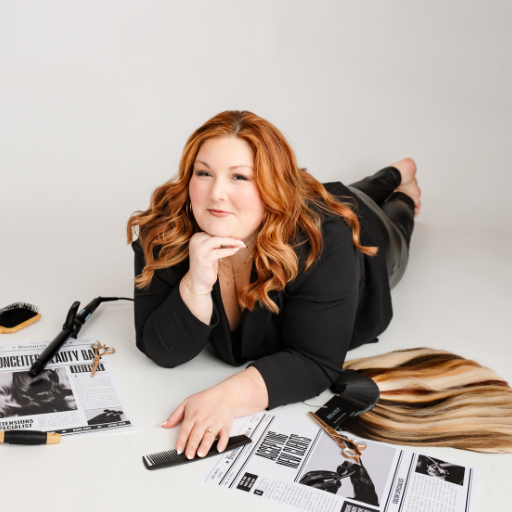
I'm Brooke Chhina, a licensed cosmetologist, cosmetology educator, hair restoration specialist, and trichology student (IAT) in Lancaster, PA.
I'm not a doctor or dermatologist.
Alopecia areata is a medical condition that belongs with a physician or board-certified dermatologist for diagnosis, monitoring, and treatment.
My trichology training allows me to recognize hair and scalp patterns, understand the science behind many forms of hair change, identify factors that may be contributing to what you're experiencing, and know when something belongs with a medical provider.
It does not allow me to diagnose or treat alopecia areata.
My cosmetic hair restoration work runs alongside medical care, never in place of it.
If you have not yet been evaluated by a dermatologist, that conversation should come first.
What I can speak to is the cosmetic side: custom hair toppers, foundation methods, blending, maintenance, support areas, and whether your natural hair can appropriately support an installed restoration system.
If you want the bigger picture on autoimmune-related hair changes, you can also read my guide to autoimmune hair loss in women.
What a custom hair topper actually is
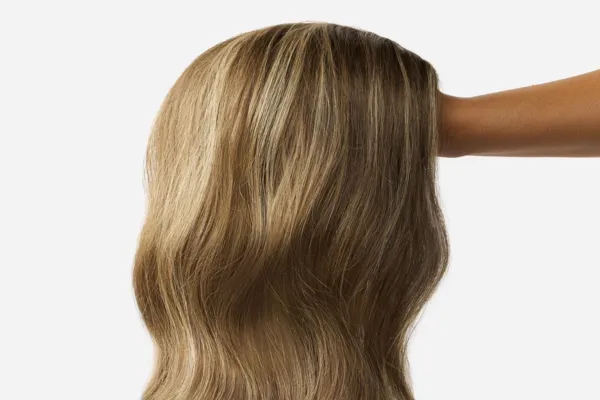
A custom hair topper is the actual hairpiece used to provide targeted coverage over a specific area of the scalp.
Unlike a full wig, a topper is designed to work with the natural hair that remains.
Depending on your coverage needs, that may include the crown, part, top of the head, hairline, or another affected area.
Your natural hair remains part of the finished result, and the topper is customized to blend with it.
A topper may be constructed with:
lace
HD lace
another appropriate base material
The topper construction is selected according to the coverage area, comfort, desired finish, natural hair, and cosmetic goals.
The topper is the hairpiece.
Mesh Integration and Meshless Integration are two possible foundation methods underneath the topper.
How Mesh Integration works
With Mesh Integration, breathable mesh is laid over the appropriate area first.
Natural hair is carefully fed through the mesh and secured with beads through or on the mesh foundation.
The custom hair topper is then sewn onto the completed mesh-and-beaded foundation.
Mesh Integration may be considered when the natural hair available for support benefits from additional foundation structure.
How Meshless Integration works
With Meshless Integration, no mesh layer is used.
A customized beaded-only foundation is created using natural hair that has sufficient structural strength to support the system.
The custom hair topper is then sewn onto that completed foundation.
Meshless Integration may be considered when the available natural hair can appropriately support a beaded-only foundation.
Neither method is inherently better.
The choice depends on the natural hair available for support, its structural strength, the size and location of the coverage area, comfort, lifestyle, maintenance preferences, and cosmetic goals.
You can also learn more about Mesh Integration and my broader approach to cosmetic hair restoration.
Why alopecia areata requires an individualized approach
Alopecia areata does not look exactly the same on every scalp.
Hair loss may appear in one defined area, several areas, or a pattern that changes over time.
Some areas may regrow while others remain affected.
That means I cannot choose a topper or foundation based only on the diagnosis.
I need to look at the hair you actually have.
I consider:
where coverage is needed
the size of the affected area
the natural hair available around it
the structural strength of that hair
scalp comfort
whether there are areas I do not want to load mechanically
your lifestyle
maintenance preferences
cosmetic goals
The restoration plan has to respect what your natural hair can appropriately support today.
What I actually evaluate in my studio
Most women searching for toppers online find a huge range of ready-to-wear pieces, clip-in systems, snap-on hairpieces, and generic bases.
That is not the work I specialize in.
My approach begins with the coverage problem itself.
Where do you need visual density?
What natural hair is available around that area?
Can that hair appropriately support an installed foundation?
Would an integrated topper actually improve your day-to-day experience?
Or is this a situation where waiting, changing the cosmetic plan, or continuing medical evaluation makes more sense?
Those questions come before choosing Mesh or Meshless.
The topper should blend naturally
The cosmetic goal is targeted coverage that blends with the natural hair around it without unnecessary bulk or an obvious transition.
That may require customized color, density, placement, cutting, and styling.
Comfort matters
If an affected area is tender, irritated, inflamed, or otherwise uncomfortable, I want that considered before adding an installed system.
A dermatologist manages the medical condition.
My responsibility is to make sure the cosmetic plan does not ignore what the scalp is telling us.
Support comes from appropriate natural hair
Foundation placement is planned around natural hair that has enough density and structural strength to appropriately support the system.
This is the idea behind anchored, not gripped.
I am not simply attaching something wherever hair happens to remain.
The support pattern is designed intentionally.
Unnecessary mechanical stress matters
No installed hair system is literally tension-free.
What I can do is design the foundation around the natural hair's support capacity and avoid concentrating unnecessary mechanical stress in small areas.
Foundation selection, placement, maintenance, and reassessment all matter.
What if your alopecia areata patches are still changing?
This is where the answer becomes more individualized.
A changing pattern does not automatically mean you can or cannot wear an integrated topper.
I need to look at:
where the changing areas are
whether they overlap with potential support hair
the condition of the scalp
whether there is enough stable natural hair to support the foundation
what your dermatologist is currently managing
whether an installed system makes sense for your current stage
Sometimes the answer is yes.
Sometimes the answer is not yet.
Sometimes the better cosmetic option is something different from an integrated topper.
I do not want to promise that a foundation installed today will automatically remain appropriate if the natural hair available for support changes.
That is why ongoing reassessment matters.
At maintenance appointments, I review the natural hair, support areas, foundation, placement, coverage needs, comfort, and blend.
If your hair changes, the cosmetic restoration plan can change too.
Can you wear a topper while alopecia areata is active?
Possibly, but this is not a blanket yes.
An alopecia areata diagnosis does not tell me enough by itself.
If the areas needed for support are changing significantly, if the scalp is uncomfortable, or if there is not enough appropriate natural hair available to carry the system, I may recommend waiting.
If the affected area can be covered while the foundation is supported from suitable natural hair elsewhere, cosmetic restoration may still be worth discussing.
This is exactly why I do not choose a restoration system from a photograph or diagnosis alone.
I need to evaluate the actual hair and support pattern.
Why I don't use clip-in toppers
I do not work with clip-in toppers or snap-on hairpieces in my cosmetic restoration work.
Clips repeatedly load small attachment areas of natural hair.
Repeated tension can begin as a potentially reversible, non-scarring process but may become permanently scarring when tension continues over time.
That does not mean every person who wears a clip-in topper will develop traction alopecia.
It means I prefer customized foundations where I can plan and continually reassess how the system is supported by the natural hair available.
For someone already navigating alopecia areata, I do not want to introduce avoidable traction-related stress to the support hair.
What should you expect from a custom topper?
When a custom topper is appropriate, the goal is:
natural-looking targeted coverage
a fit designed around your lifestyle
comfortable wear
thoughtful foundation placement
blending with your natural hair
a maintenance plan that allows the system to be reassessed as your hair changes
a design created for your specific coverage needs
It should not feel painfully tight, excessively heavy, constantly irritating, or unstable.
If you have worn a topper or hairpiece before and experienced those problems, that does not automatically mean all toppers are wrong for you.
The previous hairpiece, attachment method, foundation, fit, or coverage plan may simply not have suited your needs.
Where your dermatologist fits, and where I fit
Your dermatologist diagnoses alopecia areata, evaluates disease activity, and determines appropriate medical treatment.
That role is medical.
My role is cosmetic.
I cannot stop alopecia areata, prescribe treatment, or determine medically why a patch is changing.
What I can do is evaluate what your natural hair can currently support and design cosmetic coverage when it is appropriate.
For some women, those two forms of care happen at the same time.
You continue working with your dermatologist on the condition itself while I focus on how you want your hair to look and feel today.
What about hair extensions?
Hair extensions and custom hair toppers solve different problems.
Hair extensions add length and fullness through existing hair.
They do not replace missing visual density through a defined patch, top, crown, or part.
A custom topper provides targeted coverage.
Some cosmetic restoration plans may include both a topper and extensions when additional length or fullness is also a goal.
Others need only a topper.
Others may not be ready for an installed restoration system yet.
The plan depends on the hair in front of me.
How this works in my studio
If you're wondering whether a custom hair topper is an appropriate cosmetic restoration option for you, The Discovery is where I begin.
The Discovery is an in-studio consultation where I review:
your hair history
your visible density pattern
the areas where you want coverage
the natural hair available for structural support
scalp comfort
lifestyle
maintenance preferences
cosmetic goals
the hair-change contexts that may be relevant within The 6-Cause Restoration Method™
From there, I create your personalized Restoration Roadmap.
Your Roadmap may include:
a custom hair topper with Meshless Integration
a custom hair topper with Mesh Integration
hair extensions if length or fullness is also a goal
a combination of topper-based restoration and extensions
a cosmetic hair-care plan while your natural hair changes
a recommendation to see your dermatologist first, then come back to me
Your Restoration Roadmap is sent to your phone and is yours to keep whether or not you decide to continue with me.
If you're in Lancaster, PA, or traveling in for cosmetic hair restoration, Begin Your Discovery.
I work by application only.
Sometimes the answer is a custom topper.
Sometimes the answer is to wait.
Sometimes the answer is to continue medical care first and revisit cosmetic restoration later.
The point of The Discovery is to know which conversation actually makes sense for your hair.
I'm Brooke Chhina, a licensed cosmetologist, cosmetology educator, hair restoration specialist, and trichology student (IAT) in Lancaster, PA, and the creator of The 6-Cause Restoration Method™. I'm not a medical doctor. For diagnosis or treatment of medical conditions affecting your hair, scalp, or general health, please consult a licensed physician or board-certified dermatologist. Cosmetic hair restoration runs alongside medical care, never in place of it.
Conceited Beauty Bar · Sola Salons Studio 9A · 1500 Gilbert Way, Lancaster, PA 17601
Crowned in Confidence · Your Beauty, Elevated.