Female Pattern Hair Loss: What Every Woman Should Know
You've been watching your hair thin for a while now.
Not necessarily a sudden shed.
Not necessarily one dramatic event.
More often, it is a gradual change.
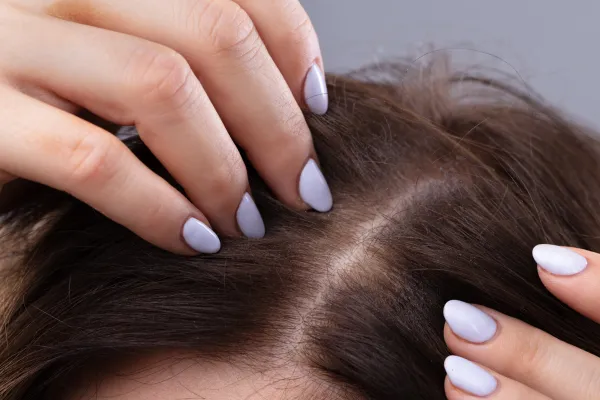
Your part looks wider than it used to.
Your ponytail feels smaller in your hand.
The individual hairs through the top of your head may seem finer.
Photos catch light through your crown in a way they did not a few years ago.
Maybe you've already been told you have female pattern hair loss.
Maybe you've been told it is hereditary.
Maybe someone handed you a treatment recommendation and told you to wait.
Or maybe no one has given you a clear explanation at all.
This article is going to walk you through what female pattern hair loss is, what may be happening at the follicle level, where medical care belongs, and where cosmetic hair restoration can fit.
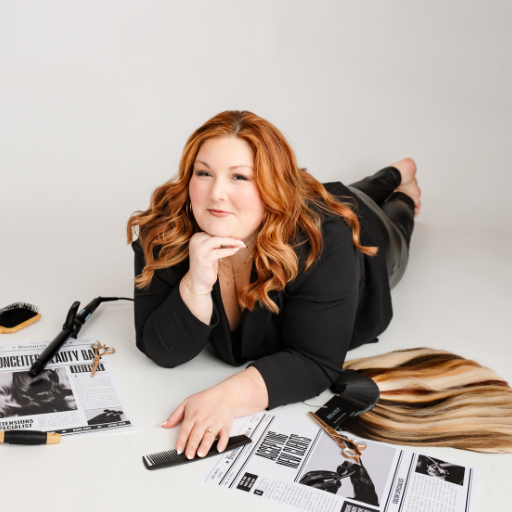
I'm Brooke Chhina, a licensed cosmetologist, cosmetology educator, hair restoration specialist, and trichology student with the International Association of Trichologists (IAT) in Lancaster, PA.
Genetics & Pattern Hair Loss is one of the six contributing causes I built The 6-Cause Restoration Method™ around, and female pattern hair loss sits within that cause.
First, the scope
I'm a licensed cosmetologist, cosmetology educator, hair restoration specialist, and trichology student, not a physician or dermatologist.
Female pattern hair loss is a medical hair-loss condition that should be diagnosed by an appropriate medical provider.
My trichology education allows me to recognize hair and scalp patterns, understand the science behind many forms of hair change, identify factors that may be contributing to what you're experiencing, and know when something belongs with a medical provider.
It does not allow me to diagnose female pattern hair loss or prescribe treatment.
Medications, laboratory testing, medical procedures, and treatment decisions belong with your physician or board-certified dermatologist.
My role is the cosmetic side of the conversation.
What female pattern hair loss actually is
Female pattern hair loss is commonly associated with androgenetic alopecia.
One of the important processes involved is called follicular miniaturization.
A healthy terminal follicle normally produces a relatively thick, pigmented hair.
In genetically susceptible follicles, that can begin to change over successive hair cycles.
Testosterone can be converted into dihydrotestosterone, or DHT, through the enzyme 5-alpha-reductase.
In androgenetic alopecia, susceptible follicles may gradually produce hairs that become finer and shorter.
That change in hair diameter is important.
You can lose a surprising amount of visual density without suddenly losing every follicle in an area.
The hair may still be growing, but more of it may be increasingly fine.
Is DHT the whole explanation in women?
No.
This is an important distinction.
The DHT and miniaturization pathway is part of androgenetic alopecia, but female pattern hair loss is more complex than simply saying:
"DHT causes women's hair loss."
Genetic susceptibility, hormonal influences, age, and other biological factors may all be involved.
Not every woman with female pattern hair loss has elevated androgen levels.
That is one reason medical evaluation matters.
What female pattern hair loss can look like
Female pattern hair loss often creates a different visible pattern than the classic recession many people associate with male pattern hair loss.
Common signs may include:
widening through the center part
greater scalp visibility through the crown or top
reduced overall density through the mid-scalp
finer-feeling hair through affected areas
gradual change rather than one sudden shedding event
The frontal hairline may remain relatively preserved in many women.
That pattern is one of the reasons someone can experience significant visible thinning through the top while still appearing to have plenty of hair around the sides or perimeter.
You can read more about crown thinning here.
Female pattern hair loss is not the same as telogen effluvium
This distinction matters.
Telogen effluvium usually involves a larger-than-usual number of hairs shifting through the hair cycle and shedding.
That pattern is often more diffuse.
Female pattern hair loss is associated with progressive miniaturization in a characteristic distribution.
But the two can also overlap.
Someone can have an underlying pattern of miniaturization and experience a separate shedding event at the same time.
That is one reason I do not assume every woman with a wider part has only one thing contributing to her hair changes.
Why female pattern hair loss may become more noticeable in midlife
Many women first become concerned about pattern thinning during their 30s, 40s, or 50s.
That does not mean female pattern hair loss follows one predictable age-based timeline.
Some women notice changes earlier.
Others do not notice meaningful thinning until later.
For women moving through perimenopause or menopause, hormonal changes may overlap with an existing susceptibility to pattern hair loss.
That can make the overall change in density more noticeable.
Hormonal Transitions is a separate contributing cause within The 6-Cause Restoration Method™, which is important because more than one cause can be relevant to the same hair story.
If you're navigating that overlap, read my Perimenopause Hair Changes guide.
Other factors may overlap
Female pattern hair loss does not exist in a vacuum.
Other conditions or changes can affect how your density looks or how much hair you're shedding.
That may include:
Perimenopause and menopause
Hormonal changes during the menopause transition may influence hair growth, hair diameter, and visible density.
PMOS, formerly known as PCOS
Androgen-related conditions such as PMOS, formerly known as PCOS, may be relevant in some women experiencing pattern hair loss.
A physician is the appropriate person to evaluate that possibility.
Thyroid-related changes
Thyroid disorders can be associated with hair changes and shedding.
They should not automatically be assumed to be the cause of a widening part, but they may overlap with other hair-loss patterns.
Nutritional factors
Iron status, overall nutrition, protein intake, and other nutritional factors may influence hair shedding.
Again, that does not mean every woman with pattern thinning needs supplements.
If your doctor thinks bloodwork is appropriate, ask whether thyroid testing and ferritin should be included rather than assuming a standard panel covers everything relevant to hair shedding.
Your physician can determine which tests make sense based on your history and symptoms.
Medication, illness, or significant physiologic stress
These can contribute to additional shedding that may make underlying pattern thinning more visible.
The important point is:
one visible pattern does not always equal one contributing factor.
The medical side
Female pattern hair loss is a condition where medical evaluation can matter, especially when the change is ongoing.
A board-certified dermatologist can determine whether you have female pattern hair loss and whether treatment is appropriate.
Depending on the individual, medical conversations may include options such as:
topical minoxidil
prescription medications
low-dose oral minoxidil in appropriate patients
anti-androgen therapies in appropriate patients
procedural options such as PRP
low-level light or laser therapies
hair transplantation in selected cases
Those are medical decisions.
I do not tell clients which medication they should take, whether they should stop a medication, or which medical procedure is appropriate.
What I can do is recognize when the pattern deserves that conversation and explain where cosmetic restoration fits alongside it.
Why early medical evaluation can matter
Female pattern hair loss is a progressive form of hereditary hair loss.
That is why earlier medical evaluation can matter.
A dermatologist can assess whether treatment may help preserve or improve the natural hair that is still present.
But I do not predict exactly how quickly someone's pattern will change.
Two women with similar-looking thinning today can have very different experiences over time.
That uncertainty is one reason the cosmetic restoration plan should be reassessed rather than built around assumptions about future progression.
Where cosmetic hair restoration fits
Medical treatment and cosmetic hair restoration solve different problems.
Medical care addresses the biological side.
Cosmetic restoration addresses what you see in the mirror today.
That may mean restoring:
visible density
crown coverage
part coverage
length
fullness
overall balance
The method depends on the hair you actually have.
Not on a label like "early," "middle," or "advanced."
When extensions may help
Hair extensions primarily add length and fullness through existing hair.
If your primary concern is reduced fullness through the lengths and you still have appropriate natural hair available for support, extensions may be part of the conversation.
Depending on the hair, that may include methods such as:
K-tips
wefts
another appropriate extension method
But traditional extensions do not create targeted scalp coverage through a widening part or visibly thinned crown.
That is an important limitation.
When a custom hair topper may make more sense
A custom hair topper is the actual hairpiece used to provide targeted coverage through areas such as the:
crown
part
top
hairline
If the area bothering you most is visible scalp through the top of your head, a topper may address that concern more directly than extensions.
The topper itself may be constructed using:
lace
HD lace
another appropriate base construction
That describes the hairpiece.
Then I decide how that topper should be supported.
Meshless Integration
Meshless Integration uses a customized beaded-only foundation beneath the custom hair topper.
There is no mesh layer.
I create the foundation using natural hair with enough structural strength to appropriately support the system.
The custom hair topper is then sewn onto that completed foundation.
Meshless Integration may be considered when the natural hair available is appropriate for a beaded-only foundation.
Mesh Integration
Mesh Integration also uses a custom hair topper.
The difference is the foundation underneath it.
With Mesh Integration:
A breathable mesh is laid over the appropriate area.
Natural hair is carefully fed through the mesh.
That natural hair is secured with beads through or on the mesh foundation.
The custom hair topper is sewn onto the completed mesh-and-beaded foundation.
The mesh is not the topper.
The custom hair topper is the hairpiece.
The mesh-and-beaded structure is the foundation beneath it.
Mesh Integration may be considered when additional foundation structure is appropriate for the natural hair available.
How I choose between Mesh and Meshless
I do not choose Mesh or Meshless Integration based on whether someone's hair loss is labeled early, moderate, or advanced.
I look at:
the natural hair available for support
structural strength
visible density
size and location of the coverage area
comfort
lifestyle
maintenance preferences
styling goals
cosmetic goals
Neither method is automatically better.
The right foundation depends on what the natural hair can appropriately support.
You can read my full comparison in Mesh Integration vs. Meshless Integration.
Where extensions and toppers can work together
These services do not have to compete.
For some women, the right cosmetic plan may be:
custom hair topper for crown or part coverage + extensions for additional length and fullness
For another woman, a topper alone may provide everything she wants.
For someone whose top density remains sufficient but whose lengths feel thin, extensions alone may be appropriate.
The goal is to solve the actual cosmetic concern, not force everyone into the same method.
Why I don't offer clip-in toppers
I don't work with clip-in toppers or snap-on hairpieces in my cosmetic restoration work.
Clips repeatedly load small areas of natural hair.
Repeated tension can begin as a potentially reversible, non-scarring process but may become permanently scarring when tension continues over time.
That does not mean every person who wears a clip-in topper will develop traction alopecia.
It means I prefer systems where I can intentionally design and reassess the foundation according to the natural hair available for support.
What maintenance looks like
Integrated topper systems require ongoing maintenance.
At those appointments, I reassess:
the foundation
the natural hair being used for support
visible density
comfort
topper placement
blend
styling
whether the current foundation still fits the hair
Your natural hair may change.
Your restoration should be reassessed with it.
I do not design a system based on a prediction of exactly where your hair loss will progress.
I design around what I see now and reassess as your hair changes.
A few things I want women with pattern hair loss to know
Female pattern hair loss is not something you can diagnose from a shampoo bottle or an Instagram photo.
If you suspect it, medical evaluation is worthwhile.
You can pursue medical care and cosmetic restoration at the same time.
You do not have to wait until one path is "finished" before discussing the other.
Wanting cosmetic coverage does not mean you've given up on your natural hair.
The two goals can coexist.
Your restoration method should be selected around your natural support hair, not a severity label.
The same diagnosis can look completely different on two heads.
You do not have to wait until the thinning feels severe before asking questions.
A conversation does not obligate you to install anything.
If this sounds like your hair
If you've noticed a widening part, reduced crown density, finer hair through the top, or another gradual pattern of thinning, you do not need to decide whether you need extensions, a topper, Mesh Integration, Meshless Integration, or something else before you come in.
That is what The Discovery is for.
The Discovery is an in-studio consultation in my private Lancaster, PA studio.
I review:
your hair history
what you've noticed changing and when
your visible density pattern
your scalp
the natural hair available for support
the areas where you want coverage, density, length, or fullness
your lifestyle
maintenance preferences
cosmetic goals
which contributing causes within The 6-Cause Restoration Method™ may be relevant to your hair story
My trichology education helps me recognize patterns, understand the science behind many forms of hair change, identify factors that may be contributing, and know when something belongs with a medical provider.
It does not allow me to diagnose a medical condition.
From there, I create your personalized Restoration Roadmap and send it to your phone.
Your Roadmap may include:
a custom hair topper with Meshless Integration
a custom hair topper with Mesh Integration
hair extensions if length or fullness is also a goal
a combination of topper-based restoration and extensions
a cosmetic hair-care plan while you work with your medical provider
a recommendation to see your dermatologist first and return to me afterward
Your Restoration Roadmap is yours to keep whether or not you decide to continue with me.
If you're in Lancaster, PA, or traveling in for cosmetic hair restoration, Begin Your Discovery.
I work by application only.
Female pattern hair loss can change how you feel when you look in the mirror.
But you do not have to choose between caring for your natural hair medically and wanting cosmetic coverage now.
Those two conversations can happen together.
I'm Brooke Chhina, a licensed cosmetologist, cosmetology educator, hair restoration specialist, and trichology student with the International Association of Trichologists (IAT) in Lancaster, PA, and the creator of The 6-Cause Restoration Method™. I'm not a medical doctor. Medical diagnosis, laboratory testing, prescription medication, and treatment of conditions affecting the hair, scalp, or general health belong with a licensed physician or board-certified dermatologist. My cosmetic restoration work can take place alongside your medical care.
Conceited Beauty Bar · Sola Salons Studio 9A · 1500 Gilbert Way, Lancaster, PA 17601
Crowned in Confidence · Your Beauty, Elevated.