Private Hair Studio for Women: What to Expect
Table of Contents
- What a Private Hair Studio for Women Actually Means
- Who Might Prefer a Private Hair Studio?
- The Discovery Comes Before the Service
- My 6-Cause Restoration Method™
- Hair Components and Installation Methods Are Not the Same Thing
- Hair Extensions for Fine or Thinning Hair
- Hair Toppers for Top-of-Head Coverage
- When Mesh Integration or Meshless Integration Enters the Conversation
- What If You Are Not a Candidate for Added Hair?
- What Makes the Experience Different?
- Is Conceited Beauty Bar Right for You?
- Frequently Asked Questions
Last Updated: October 5, 2026
For some women, sitting in a busy open salon is easy.
For others, especially when hair has become fine, thinning, or noticeably different, it is the last place they want to explain what is happening.
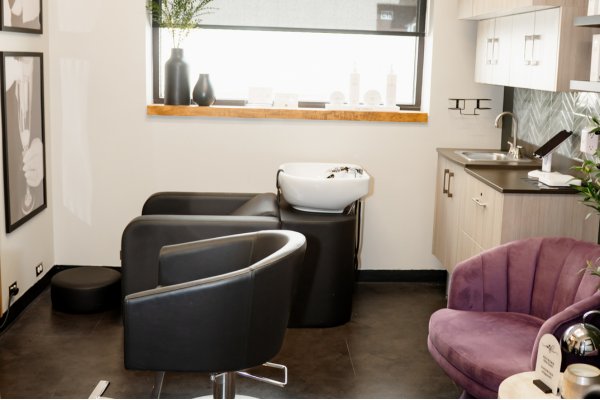
That is one of the reasons I built Conceited Beauty Bar as a private, one-on-one hair studio in Lancaster, PA.
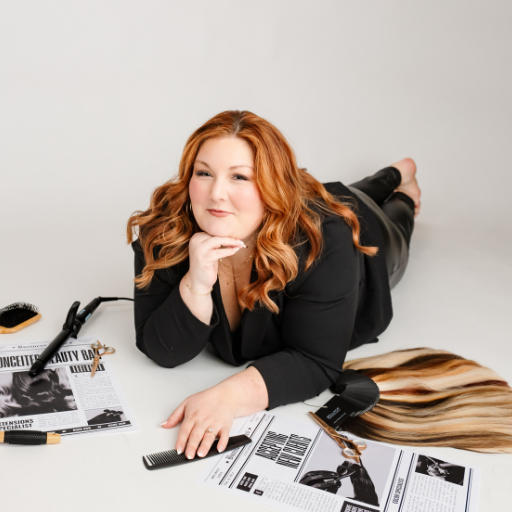
I am Brooke Chhina, a licensed cosmetologist, cosmetology educator, and trichology student with the IAT, with 17 years behind the chair.
My studio specializes in luxury hair extensions and cosmetic hair restoration for women experiencing fine, thinning, or changing hair.
It is private.
It is application-only.
And every plan begins with the hair in front of me, not a predetermined service.
No explanations required.
What a Private Hair Studio for Women Actually Means
A private hair studio is different from an open salon environment because the appointment is centered around one client at a time.
At Conceited Beauty Bar, that gives me room to focus closely on:
- Natural density
- Hair condition
- Scalp condition
- Areas where coverage is needed
- Strand strength
- Lifestyle
- Styling habits
- Maintenance expectations
- Desired result
- What the natural hair can safely support
It also gives clients privacy.
There is no audience while you talk about a widening part, shedding after weight loss, hormonal changes, an autoimmune condition, trichotillomania recovery, or simply the fact that your hair does not feel like it used to.
You do not have to explain why you want privacy.
You already have it.
Who Might Prefer a Private Hair Studio?
A private studio can be especially appealing for women who:
- Feel self-conscious discussing hair loss or thinning in an open salon
- Prefer one-on-one appointments
- Want a stylist who works specifically with fine, thinning, or changing hair
- Need more time spent evaluating density before choosing a method
- Want cosmetic coverage without being rushed into a standard service
- Value discretion
- Want their extensions or restoration plan customized around their natural hair
- Have had a previous extension or hairpiece experience that did not feel right
- Want to understand their options before committing to anything
Privacy is part of the experience, but it is not the only difference.
The planning matters just as much.
The Discovery Comes Before the Service
New clients do not simply book an installation.
The process begins with The Discovery.
That is where I look at the current hair, discuss what has changed, understand the cosmetic goal, and determine what the natural hair can reasonably support.
I consider:
- Where density has changed
- Where fullness or coverage is needed
- Whether the concern is primarily length, volume, coverage, or a combination
- Natural hair condition
- Hair and scalp condition
- Lifestyle
- Maintenance commitment
- What has or has not worked in the past
The question I come back to is:
What can your hair safely carry?
The method gets fitted to your natural hair, never the other way around.
My 6-Cause Restoration Method™
I created the 6-Cause Restoration Method™ as a cosmetic consultation framework for women navigating fine, thinning, or changing hair.
The six contexts are:
- GLP-1 & Medication
- Hormonal Transitions
- Genetics & Pattern Hair Loss
- Autoimmune Hair Conditions
- Trichotillomania Recovery
- Mechanical & Chemical Damage
This is not a medical diagnostic system.
It helps me understand the context around the hair changes while I build the cosmetic plan.
Medical diagnosis and treatment belong with a physician or dermatologist.
My role is to assess the hair that is physically present and determine which cosmetic options may make sense.
Hair Components and Installation Methods Are Not the Same Thing
This distinction matters because hair restoration terminology gets confusing very quickly.
Hair components include:
- Extensions
- Toppers
- Lace closures
- Full lace units
Those are the actual hair being used.
Extension methods include:
- K-tip
- I-tip
- Tape-in
- Weft
Those describe how extension hair is added.
Integration methods include:
Those are installation methods used within certain cosmetic restoration plans.
A topper, for example, may remain completely removable.
Or a topper may be installed through Meshless Integration.
In that situation:
The topper is the hair component.
Meshless Integration is the installation method.
That distinction allows me to build the plan around what the client actually needs instead of forcing her into a named "system."
Hair Extensions for Fine or Thinning Hair
Fine or thinning hair does not automatically rule out extensions.
It also does not automatically make one extension method the best choice.
When I consider extensions, I look at:
- Density at the attachment area
- Strand condition
- Hair and scalp condition
- Where fullness is needed
- How much added hair is necessary
- How much weight each area can reasonably support
- Lifestyle
- Maintenance
Different extension methods give me different options.
K-tips allow individually placed attachments.
I-tips use individual beaded attachments.
Tape-ins use flat panels.
Wefts create broader fullness across a row.
The right choice depends on the natural hair, not on which method is currently popular.
If I do not believe the natural hair can safely support extensions, I will say so.
Hair Toppers for Top-of-Head Coverage
A hair topper may make sense when the primary concern is coverage through the part, crown, or top of the head.
Most traditional toppers are removable clip-on and clip-off pieces.
Common topper constructions include:
- Monofilament
- Silk
- Silicone
I look at:
- Coverage area
- Base size
- Density
- Part placement
- Color
- Texture
- Length
- Natural hair surrounding the piece
- Lifestyle
- How the client wants to wear it
A topper does not need to become an integrated installation.
For some women, removable coverage is exactly what they want.
For others, a topper may become the hair component used within a Meshless Integration plan.
When Mesh Integration or Meshless Integration Enters the Conversation
Mesh Integration and Meshless Integration come into the conversation when the cosmetic plan requires more than traditional extension placement or a removable piece alone.
Mesh Integration uses a mesh foundation as part of the installation.
Meshless Integration uses strategic anchors without a traditional full mesh foundation.
The hair used within the plan may include:
- Extensions
- A topper
- A lace closure
- A full lace unit
- Or a combination
I do not choose Mesh or Meshless based on a simple "mild versus severe" thinning scale.
I look at:
- Current density
- Coverage needs
- Available anchor areas
- Hair condition
- Selected hair component
- Lifestyle
- Maintenance
- Desired result
- What the natural hair can safely support
Neither method is automatically better, lighter, or more comfortable.
The right installation depends on the individual client.
What If You Are Not a Candidate for Added Hair?
Sometimes the most responsible recommendation is not to add hair yet.
If I see rapid changes in density, scalp symptoms, patchy loss, significant fragility, or something else that raises concern, I may recommend medical evaluation before moving forward.
A dermatologist or appropriate medical provider can investigate the medical side.
That does not mean cosmetic planning has failed.
It means we are respecting the natural hair and staying in the correct lane.
Medical care and cosmetic restoration can run alongside each other.
What Makes the Experience Different?
A private studio is not simply about closing the door.
For me, it means having the space to slow down and make better decisions.
I am not trying to fit every client into the same extension method, topper, or restoration plan.
I want to understand:
What do you actually want your hair to do?
Then:
What does your natural hair allow me to do safely?
Sometimes those answers line up immediately.
Sometimes the cosmetic goal needs to be adjusted.
Sometimes I combine approaches.
And sometimes the answer changes as the natural hair changes.
That flexibility is part of the process.
Is Conceited Beauty Bar Right for You?
Conceited Beauty Bar may be a good fit if you are looking for:
- A private hair studio in Lancaster, PA
- One-on-one care
- Luxury hair extensions
- Cosmetic hair restoration
- Help navigating fine, thinning, or changing hair
- Hair toppers
- Mesh Integration
- Meshless Integration
- A consultation-first approach
- A stylist who is willing to tell you when a method is not appropriate for your current hair
You can also learn more about my background and approach before deciding whether the studio feels right for you.
The studio is application-only.
The first step is not booking a service.
It is starting the conversation.
Frequently Asked Questions
What is a private hair studio for women?
A private hair studio offers one-on-one appointments rather than an open salon-floor experience. At Conceited Beauty Bar, I work with one client at a time in a private Lancaster studio specializing in luxury hair extensions and cosmetic hair restoration for women with fine, thinning, or changing hair. The environment allows for more privacy, individualized planning, and focused conversation around the client's hair and goals.
Do I need to have hair loss to come to Conceited Beauty Bar?
No. I work with women seeking luxury extensions as well as women experiencing fine, thinning, or changing hair. The important part is that every plan is based on current density, hair condition, lifestyle, desired result, and what the natural hair can safely support.
Can hair extensions work for fine or thinning hair?
Possibly. Fine or thinning hair does not automatically rule out extensions. I look at density at the attachment area, strand condition, hair and scalp condition, desired fullness, placement, and how much added weight each area can reasonably support. If extensions are asking too much of the hair, I recommend another cosmetic option.
What is the difference between a topper and Meshless Integration?
A topper is a hair component. Meshless Integration is an installation method. A topper may remain removable, or it may be installed through Meshless Integration depending on the cosmetic restoration plan. They are not competing products.
What is the difference between Mesh Integration and Meshless Integration?
Both are installation methods. Mesh Integration uses a mesh foundation as part of the installation. Meshless Integration uses strategic anchors without a traditional full mesh foundation. The right method depends on the client's density, coverage needs, selected hair component, lifestyle, maintenance, and what the natural hair can safely support.
What happens during The Discovery?
The Discovery is where I evaluate your current hair, discuss your goals, review lifestyle and maintenance expectations, and determine which cosmetic approaches may make sense. It is also where I can tell you if I believe a particular method is not appropriate for your current hair.
Do you diagnose hair loss?
No. I work cosmetically. I can assess current density, hair condition, scalp condition, coverage needs, and what the natural hair may safely support. Medical diagnosis and treatment belong with physicians and dermatologists.
How do I become a new client?
Conceited Beauty Bar is application-only. New clients begin by submitting an inquiry so I can understand what they are looking for before moving forward.
Hair changes rarely arrive on a convenient schedule, and finding a setting where you can address them privately makes the process easier. At Conceited Beauty Bar, I offer one-on-one appointments in a private Lancaster studio, a consultation-led approach built on the 6-Cause Restoration Method™, and a full toolkit that includes custom toppers, Mesh Integration, and Meshless Integration. Start your inquiry with The Discovery and we will plan what your hair can comfortably carry.