How I Blend Hair Extensions So They Look Natural
You want extensions that look like your own hair.
Not longer hair that looks added.
That result does not come from one trick at the end of the appointment.
A natural blend is planned before any hair is placed.
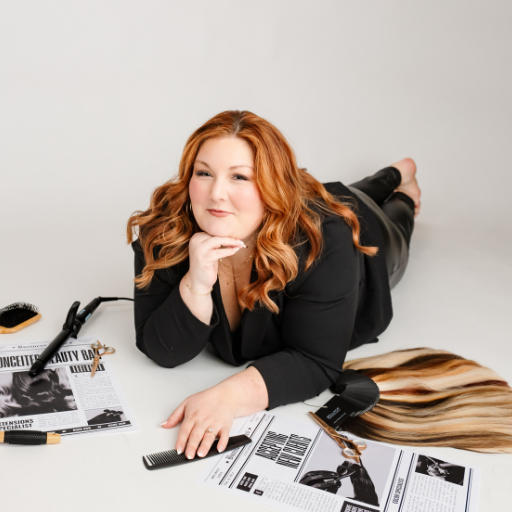
I'm Brooke Chhina, a licensed cosmetologist, cosmetology educator, hair restoration specialist, and trichology student with the International Association of Trichologists (IAT) in Lancaster, PA.
Here is how I plan and build a blend, and what I check when extensions are not blending the way they should.
A natural blend starts before installation
Every extension set I design has four parts:
The method
The placement map
The custom color blend
The finished cut
Each one is chosen around your natural hair and the result you want.
If one is off, the other three cannot hide it.
That is why I start with The Discovery, not with a method.
I review your hair history, current density, natural hair strength, lifestyle, and goals before I recommend anything.
Density: how much hair your hair can carry
The first question is not how much hair you want.
It is how much your natural hair can comfortably support.
Method, weight, and placement are selected around your density and strand strength.
The goal is to add the fullness or length you want while minimizing unnecessary tension.
It also shapes the blend.
When the amount of added hair is planned around your own density, the result reads as your hair on its best day.
Placement: where the attachments sit
Placement is mapped to keep the attachments discreet at the root and concealed as your hair moves.
I plan around your part, your crown, your growth pattern, and the way you actually wear your hair.
Down.
Tucked behind your ear.
Pulled back.
If you wear your hair up most days, tell me.
It changes the map.
Method: each one blends differently
No single method blends best on everyone.
Each has its own strengths:
K-tips are individual strands secured with small keratin bonds. The set is built one strand at a time, so fullness goes where you want it.
I-tips are individual strands secured with small beads, with no heat or adhesive. Because every strand is separate, I can balance weight around your part.
Tape-ins are thin panels that lie flat against the head. They are a low-profile option when a wider, flat attachment suits your placement.
Wefts are thin, flexible wefts sewn onto beaded foundation rows. They add noticeable fullness through the back and sides and sit close to the head.
Which one I recommend depends on your density, strand strength, lifestyle, and the result you want.
I compare them in more detail in my guide to choosing an extension method.
Color: tone, depth, and dimension
A blend is more than one matching shade.
Natural hair is not one flat color.
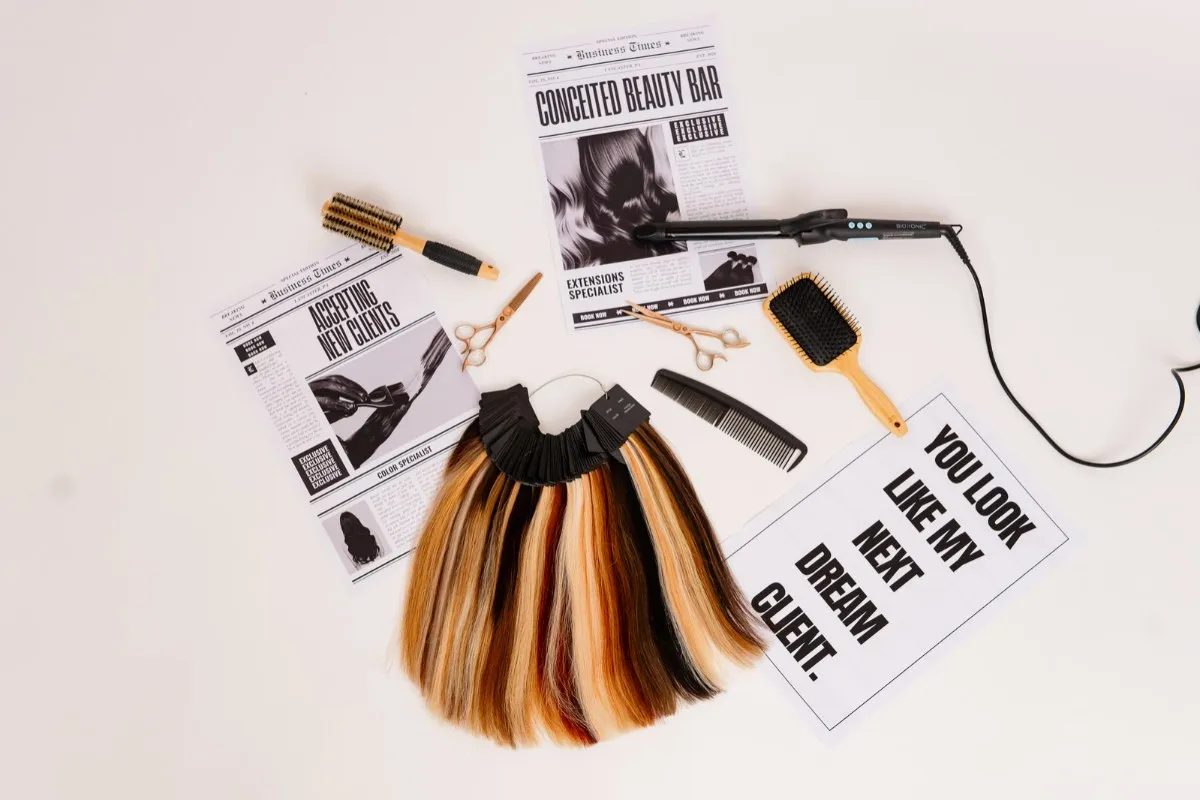
So the hair I source is color-matched to your tone, texture, and dimension.
With K-tips and I-tips, I thread brightness, depth, and lowlights through the set strand by strand.
With tape-ins, color is blended panel by panel.
With wefts, color is blended across the wefts and through your natural hair before the whole look is shaped into one cut.
Texture and movement
Color is only part of it.
Hair that matches in color but moves differently can still look added.
That is why texture is matched along with tone.
Individual strand methods let the hair swing, part, and style like your own.
Wefts are designed to sit close to the head and move comfortably with your natural hair.
The cut finishes the blend
Extensions are not finished when the last strand is placed.
Every set is cut, shaped, and styled to blend with your own hair.
The cut is what brings your length and the added length into one shape.
The goal is length, fullness, color, and movement that look like they have always belonged together.
Why extensions can still look obvious
When a set is not blending, these are the things I check:
Too much hair for the natural density. The added hair outweighs the hair around it.
Color with no dimension. One flat shade sits next to hair that has natural variation.
Placement that ignores how you wear your hair. Attachments show when the hair is tucked or pulled back.
No finishing cut. Your ends and the added ends were never shaped together.
Overdue maintenance. The attachments have grown away from the root.
Maintenance keeps the blend
Your hair keeps growing, so a blend needs upkeep.
Depending on the method, extensions are refreshed anywhere from every 6 to 8 weeks to every few months.
Your schedule is set after I evaluate your hair.
At home, three habits protect the finish:
Brush gently with a loop or extension brush, holding the root and working up from the ends.
Use a heat protectant, keep your heat on low to medium, and keep direct heat off the attachments.
Go to bed with dry hair, with your length in a loose, low braid.
The full routine is in my Extension & Restoration Care Guide.
I explain how I plan placement, maintenance, and removal in How I Protect Your Natural Hair With Extensions.
What extensions are not designed to do
Extensions add length and fullness through your existing hair.
They do not create coverage through the crown, the part, or the hairline.
If coverage is your main concern, a topper may be the better fit.
A topper is the hair component. Meshless Integration or Mesh Integration is how I install it.
Sometimes a topper and extensions are planned together, when both coverage and length are wanted.
I also do not offer clip-in extensions.
I prefer methods that let me control placement, weight, and maintenance over time.
If you have a clip-in set you bought, I can customize it for you.
Frequently asked questions
How do you blend hair extensions so they look natural?
I plan four things around your natural hair: the method, the placement map, the custom color blend, and the finished cut.
The amount of hair is selected around your own density, and the set is cut and shaped with your hair at the end.
How much hair should be added for a natural-looking blend?
There is no standard amount.
It is decided around your natural density, your strand strength, and the result you want.
I tell you what your hair can comfortably support before you commit.
Why do my extensions look obvious even when the color matches?
Color is one part of the blend.
Density, placement, texture, and the cut matter as much.
A matching shade cannot make up for too much added hair, a visible attachment, or ends that were never cut together.
Can extensions blend with wavy or curly hair?
Texture is one of the things I match, along with tone and dimension.
How well a specific wave or curl pattern can be matched is something I look at in person during The Discovery.
If you want extensions that look like your own hair
New clients begin with an inquiry.
If it is a fit, the next step is The Discovery, where I review your hair and design your plan.
Every extension plan is backed by The Conceited Care Promise™.
I am a licensed cosmetologist and trichology student, not a medical provider. Cosmetic hair restoration can complement appropriate medical or mental health care, but it does not replace it.