Hair Integration Systems for Women: Mesh vs. Meshless
Table of Contents
- What Is a Hair Integration System for Women?
- Hair Integration vs. Traditional Hair Extensions
- Hair Components and Installation Methods Are Different
- Mesh Integration: How the Installation Method Works
- Meshless Integration: Strategic Anchors Without a Traditional Mesh Foundation
- What Hair Can Be Used in an Integration Plan?
- How I Decide Which Hair Component Makes Sense
- When a Removable Topper May Be Enough
- When Hair Integration May Make More Sense
- What About Fine or Fragile Hair?
- Hair Integration and the 6-Cause Restoration Method™
- Hair Integration and Medical Care
- Hair Integration Maintenance
- What Happens If Your Natural Hair Changes?
- Is Hair Integration Right for You?
- What is a hair integration system for women?
- What is the difference between hair integration and traditional extensions?
- What is the difference between Mesh Integration and Meshless Integration?
- Is a topper the same thing as Meshless Integration?
- Can hair integration include extensions?
- Do I have to wear a permanent hair system?
- How much maintenance does a hair integration system require?
- Does hair integration treat hair loss?
- Frequently Asked Questions
Last Updated: October 5, 2026
Hair integration systems for women are often described online as though they are a single product or hairpiece.
That is not how I approach them.
At Conceited Beauty Bar in Lancaster, PA, I think of hair integration as a customized cosmetic restoration plan that brings together two separate decisions:
- 1. What hair component is needed
- 2. How that hair should be installed
The hair component may be a topper, lace closure, full lace unit, extensions, or a combination.
The installation method may be Mesh Integration or Meshless Integration.
Those are not the same thing.
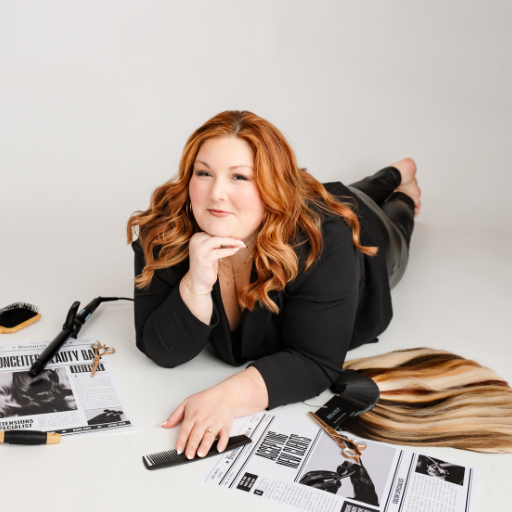
I am Brooke Chhina, a licensed cosmetologist, cosmetology educator, and trichology student with the IAT, and I have spent 17 years behind the chair.
My work is centered on women experiencing fine, thinning, or changing hair, and my approach starts with one question:
What can your hair safely carry?
The method gets fitted to the natural hair, never the other way around.
What Is a Hair Integration System for Women?
The phrase “hair integration system” is commonly used to describe a cosmetic hair restoration plan that adds coverage, density, length, or some combination of the three.
But there is an important distinction.
The hair itself and the installation method are two different parts of the plan.
Hair components may include:
- Extensions
- Toppers
- Lace closures
- Full lace units
- Or a combination of hair components
Installation methods may include:
- Mesh Integration
- Meshless Integration
The correct combination depends on the client’s current density, hair condition, coverage needs, lifestyle, maintenance expectations, and what the natural hair can safely support.
That is why I do not start with:
“Do you want Mesh or Meshless?”
I start with:
Where do you need coverage, what hair is required to create it, and how should that hair be installed?
Hair Integration vs. Traditional Hair Extensions
Traditional hair extensions and hair integration can overlap, but they do not always do the same job.
Extensions are typically used to add:
- Length
- Fullness
- Density through the lengths
- Additional hair in areas where natural hair can support attachments
Integration becomes part of the conversation when the client needs more than traditional extension placement alone can create.
That might include:
- More coverage through the top of the head
- Coverage through the crown or part
- A larger area of changing density
- A combination of top-of-head coverage and added length
- Different solutions in different areas of the head
If you want a deeper comparison of extension methods themselves, I break that down in Best Hair Extensions for Volume: Which Method Is Right for Your Hair?.
The important point is that traditional extensions and integration are not automatically competing solutions.
Extensions may actually be one of the hair components used within a broader restoration plan.
Hair Components and Installation Methods Are Different
This is the distinction I want every client to understand.
Part of the Plan | Examples | What It Does |
|---|---|---|
Hair Component | Extensions, topper, lace closure, full lace unit | Creates the actual coverage, fullness, or length |
Installation Method | Mesh Integration, Meshless Integration | Determines how the selected hair is supported or incorporated |
Medical Care | Dermatologist, physician, other qualified provider | Evaluates diagnosis, underlying causes, and medical treatment |
A topper, for example, may remain completely removable.
Or a topper may become the hair component installed through Meshless Integration.
In that case:
The topper is the hair.
Meshless Integration is the installation method.
That distinction matters because it changes how we think about fit, maintenance, and long-term planning.
Mesh Integration: How the Installation Method Works
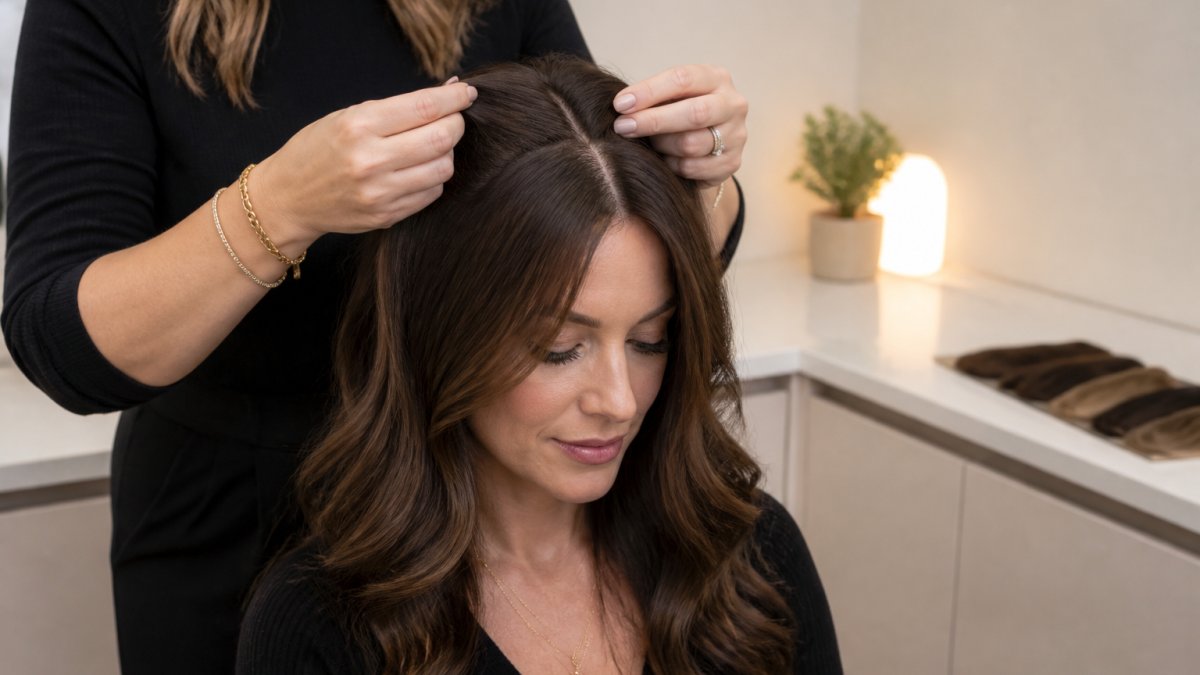
Mesh Integration uses a mesh foundation to create additional support within the installation.
That foundation allows me to build coverage where the natural hair alone may not provide enough support for the finished plan.
Depending on the client, the hair incorporated into the installation may include:
- Extensions
- A lace closure
- A full lace unit
- Other hair components
- Or a combination
Mesh Integration is not a wig.
It is also not a topper.
It is the installation method used to support and incorporate the hair needed for the final result.
I consider Mesh Integration based on factors such as:
- Current natural density
- Areas where coverage is needed
- How much natural hair is available for support
- Hair and scalp condition
- Desired result
- Lifestyle
- Maintenance
- How much added hair is needed
I do not reserve Mesh Integration for one specific “level” of thinning.
Two women can have similar visible density changes and still need different plans.
Meshless Integration: Strategic Anchors Without a Traditional Mesh Foundation
Meshless Integration uses strategic anchors rather than a traditional full mesh foundation.
Those anchors may be placed around the natural hair and coverage needs to support the selected hair component.
A topper, for example, may be installed through Meshless Integration.
That does not turn Meshless Integration into a type of topper.
It simply means the topper is the hair component being installed through that method.
I choose Meshless Integration based on:
- Natural density
- Anchor placement options
- Hair condition
- Coverage requirements
- The selected hair component
- Lifestyle
- Maintenance expectations
- What the natural hair can reasonably support
Meshless is not automatically lighter, safer, more comfortable, or better for sensitive scalps.
Mesh is not automatically stronger or better for more advanced thinning.
Those kinds of blanket rules oversimplify a very individualized decision.
The right method depends on the hair in front of me.
What Hair Can Be Used in an Integration Plan?
A hair integration plan may involve more than one type of added hair.
Extensions
Extensions may be incorporated when the plan also needs length, fullness, or additional density through areas where the natural hair can support them.
That might include K-tip, I-tip, tape-in, weft, or another planned extension method depending on the client.
Toppers
A topper is typically a removable clip-on and clip-off top-of-head piece.
Common topper base constructions include:
- Monofilament
- Silk
- Silicone
A topper may remain removable.
Or, depending on the restoration plan, a topper may be installed through Meshless Integration.
If you are exploring toppers specifically, read [Best Hair Toppers for Thin Hair: How to Choose the Right One](/blog/best-hair-toppers-for-thin-hair-how-to-choose-the-right-one).
Lace Closures
A lace closure is a lace-based top-of-head coverage piece.
It is designed for coverage through areas such as the part or crown.
A lace closure is a hair component, not an installation method.
Full Lace Units
A full lace unit provides broader lace-based coverage.
It may become part of a cosmetic restoration plan when the coverage need extends beyond what a smaller top-of-head component can create.
How I Decide Which Hair Component Makes Sense
The amount of hair you want is only one part of the conversation.
I also look at:
- Where density has changed
- Where the scalp is most visible
- What natural hair remains available
- Strand condition
- Hair and scalp condition
- How much weight the natural hair can support
- How much coverage is needed
- Desired length
- Desired fullness
- Part placement
- Lifestyle
- Styling habits
- Maintenance commitment
A woman with reduced density through the crown may need a completely different plan from someone whose primary concern is thinning through the sides.
Another client may have enough density for traditional extensions but still want additional top-of-head coverage.
Another may need a topper but no extensions at all.
The plan follows the hair.
When a Removable Topper May Be Enough
Not every client who needs top-of-head coverage needs an integration installation.
A removable topper may be enough when the coverage need can be addressed with a piece that blends naturally with the surrounding hair and the client prefers the flexibility of putting it on and taking it off herself.
A removable topper may appeal to someone who wants:
- Top-of-head coverage
- Daily control over when the hair is worn
- Less professional maintenance than an integrated installation
- The ability to remove the piece at night
- A cosmetic option without a more involved installation method
The goal is not to make the plan more complicated than it needs to be.
If removable coverage gives the client the result she wants, that may be the right answer.
When Hair Integration May Make More Sense
Hair integration may become part of the plan when the desired result requires a more involved installation approach.
That may include situations where:
- The client wants installed rather than removable coverage
- More than one hair component is needed
- Coverage extends across a larger area
- Different areas of the head require different support
- Extensions alone cannot create the required coverage
- A topper alone does not create the desired overall result
Those are planning considerations, not hard candidacy rules.
I still need to assess the client in person before I know whether an integration method makes sense.
What About Fine or Fragile Hair?
Fine hair does not automatically exclude someone from cosmetic restoration.
It does change the planning.
I look closely at:
- How much natural hair is available in each area
- Strand condition
- Where anchors or attachments could safely sit
- How much weight is being added
- How that weight will be distributed
- Whether certain areas should be avoided altogether
Sometimes a lighter or more selective plan makes sense.
Sometimes I need to change the hair component.
Sometimes I change the installation method.
And sometimes the right answer is not to add hair yet.
That is why “what can your hair safely carry?” is more important than the name of any system.
Hair Integration and the 6-Cause Restoration Method™
I created the 6-Cause Restoration Method™ as a consultation framework for women experiencing fine, thinning, or changing hair.
The six contexts are:
- GLP-1 & Medication
- Hormonal Transitions
- Genetics & Pattern Hair Loss
- Autoimmune Hair Conditions
- Trichotillomania Recovery
- Mechanical & Chemical Damage
This is not a medical diagnostic system.
It helps me understand the context surrounding the client’s hair changes while I build the cosmetic plan.
For example, a client navigating hair thinning during GLP-1 use may need a different approach than someone whose concern is longstanding pattern thinning.
A woman navigating perimenopause may have different coverage needs than someone recovering from mechanical or chemical damage.
The context matters.
But I still plan around the hair that is physically present today.
Hair Integration and Medical Care
Cosmetic hair integration does not diagnose, treat, or cure hair loss.
If hair loss is:
- Persistent
- Progressive
- Patchy
- Painful
- Rapidly changing
- Associated with burning or itching
- Accompanied by redness or scaling
- Otherwise unexplained
I recommend involving a dermatologist or appropriate medical provider.
Medical care and cosmetic hair restoration can happen alongside one another.
My role is to help answer the cosmetic questions:
- How much coverage is needed?
- What hair component makes sense?
- How should that hair be installed?
- What can the natural hair safely support?
- What maintenance plan works for the client?
Hair Integration Maintenance
Maintenance depends on both the installation method and the hair components used within the plan.
There is not one universal hair integration maintenance schedule.
Maintenance may involve:
- Professional cleansing and care
- Repositioning or refreshing anchors
- Adjustment of the installation as the natural hair grows
- Detangling and proper drying
- Evaluating the condition of the natural hair
- Checking attachment areas
- Refreshing the added hair when needed
- Adjusting the plan when natural density changes
At home, the client may also need method-specific instructions for:
- Cleansing
- Drying
- Detangling
- Brushing
- Styling
- Heat protection
- Avoiding unnecessary tension
I establish the maintenance plan during the consultation and installation process.
The right method is not the one that promises the least maintenance.
It is the one the client can realistically maintain while supporting the integrity of the overall transformation.
What Happens If Your Natural Hair Changes?
Natural density can change over time.
That means the cosmetic plan may need to change too.
A client may begin with a removable topper and later choose a different installation approach.
Someone wearing extensions may eventually need more top-of-head coverage.
A Meshless plan may need to be reconsidered if the available anchor areas change.
A Mesh Integration plan may also evolve as the natural hair and coverage needs change.
I do not believe in forcing someone to stay in the same method because that was the original plan.
The hair changes, so the plan can change too.
Is Hair Integration Right for You?
There is no universal answer.
Hair integration may be worth exploring if you are looking for cosmetic coverage and want a plan designed around:
- Your natural density
- Your hair condition
- Your coverage needs
- Your lifestyle
- Your maintenance preferences
- Your desired result
- What your natural hair can safely support
But integration is not automatically the answer simply because your hair is thinning.
You may need extensions.
You may need a removable topper.
You may need a lace closure.
You may need Mesh Integration.
You may need a topper installed through Meshless Integration.
You may need a combination.
Or you may need to wait.
At Conceited Beauty Bar, I work one-on-one in a private, application-only Lancaster studio and build the plan around the hair in front of me.
The goal is not to fit you into a system.
The system gets fitted to you.
Start Your Inquiry to explore which cosmetic restoration approach may make sense for your hair.
Frequently Asked Questions
What is a hair integration system for women?
A hair integration system is a customized cosmetic restoration plan that combines selected hair components with an appropriate installation method.
Hair components may include extensions, toppers, lace closures, full lace units, or combinations.
Mesh Integration and Meshless Integration are installation methods.
The plan is built around current density, hair condition, coverage needs, lifestyle, and what the natural hair can safely support.
What is the difference between hair integration and traditional extensions?
Traditional extensions primarily add length, fullness, and density in areas where natural hair can support attachments.
Hair integration is a broader planning approach that may include top-of-head coverage, additional support, different hair components, and an installation method such as Mesh Integration or Meshless Integration.
Extensions may also be one component within an integration plan.
What is the difference between Mesh Integration and Meshless Integration?
Both are installation methods.
Mesh Integration uses a mesh foundation as part of the installation.
Meshless Integration uses strategic anchors without a traditional full mesh foundation.
A topper may be installed through Meshless Integration.
Neither method is automatically better, lighter, or more comfortable than the other.
The choice depends on the client’s current density, hair condition, coverage needs, selected hair component, lifestyle, maintenance, and what the natural hair can safely support.
Is a topper the same thing as Meshless Integration?
No.
A topper is a hair component.
Meshless Integration is an installation method.
A topper may remain removable, or it may be installed through Meshless Integration as part of a cosmetic restoration plan.
Can hair integration include extensions?
Yes.
Extensions can be one of the hair components incorporated into a broader integration plan when the natural hair can safely support them and the finished result requires additional length or fullness.
Do I have to wear a permanent hair system?
No.
Some clients prefer removable toppers.
Others want installed coverage through Mesh Integration or Meshless Integration.
The right approach depends on the coverage needed, lifestyle, maintenance preference, and natural hair.
How much maintenance does a hair integration system require?
Maintenance depends on the installation method, hair components, natural growth, lifestyle, and how the client’s hair changes over time.
There is no single maintenance schedule that applies to every integration plan.
I establish the expected maintenance rhythm as part of the consultation and planning process so clients understand the commitment before moving forward.
Does hair integration treat hair loss?
No.
Hair integration is cosmetic.
It can create coverage, fullness, and density, but it does not diagnose or medically treat the underlying cause of hair loss.
Persistent, progressive, patchy, painful, rapidly changing, or symptomatic hair loss should be evaluated by a dermatologist or appropriate medical provider.
Frequently Asked Questions
What is a hair integration system for women?
A hair integration system is a customized cosmetic restoration plan that combines selected hair components with an appropriate installation method. Hair components may include extensions, toppers, lace closures, full lace units, or combinations. Mesh Integration and Meshless Integration are installation methods. The plan is built around current density, hair condition, coverage needs, lifestyle, and what the natural hair can safely support.
How is hair integration different from traditional hair extensions?
Traditional extensions primarily add length, fullness, and density in areas where natural hair can support attachments. Hair integration is a broader planning approach that may include top-of-head coverage, additional support, different hair components, and an installation method such as Mesh Integration or Meshless Integration. Extensions may also be one component within an integration plan.
What is the difference between Mesh Integration and Meshless Integration?
Both are installation methods. Mesh Integration uses a mesh foundation as part of the installation. Meshless Integration uses strategic anchors without a traditional full mesh foundation. A topper may be installed through Meshless Integration. Neither method is automatically better, lighter, or more comfortable than the other. The choice depends on the client’s current density, hair condition, coverage needs, selected hair component, lifestyle, maintenance, and what the natural hair can safely support.
Is a topper the same thing as Meshless Integration?
No. A topper is a hair component. Meshless Integration is an installation method. A topper may remain removable, or it may be installed through Meshless Integration as part of a cosmetic restoration plan.
Can hair integration include extensions?
Yes. Extensions can be one of the hair components incorporated into a broader integration plan when the natural hair can safely support them and the finished result requires additional length or fullness.
Do I have to wear a permanent hair system?
No. Some clients prefer removable toppers. Others want installed coverage through Mesh Integration or Meshless Integration. The right approach depends on the coverage needed, lifestyle, maintenance preference, and natural hair.
How much maintenance does a hair integration system require?
Maintenance depends on the installation method, hair components, natural growth, lifestyle, and how the client’s hair changes over time. There is no single maintenance schedule that applies to every integration plan. I establish the expected maintenance rhythm as part of the consultation and planning process so clients understand the commitment before moving forward.
Does hair integration treat hair loss?
No. Hair integration is cosmetic. It can create coverage, fullness, and density, but it does not diagnose or medically treat the underlying cause of hair loss. Persistent, progressive, patchy, painful, rapidly changing, or symptomatic hair loss should be evaluated by a dermatologist or appropriate medical provider.