Trichotillomania-Friendly Hairstylist: What to Ask Before Booking
Maybe it's been a while since your last professional haircut.
Not because you don't want one.
But because the idea of sitting in someone's chair, having them section your hair, see your scalp, and ask questions feels like a lot.
For some people navigating trichotillomania, avoiding hair appointments can become part of the experience.
You may be worried about someone's reaction.
You may not want to explain yourself.
Or you may simply want someone who can see what is happening and treat it like hair, not a spectacle.
The right stylist can make that experience completely different.
This article is about how to find that person.
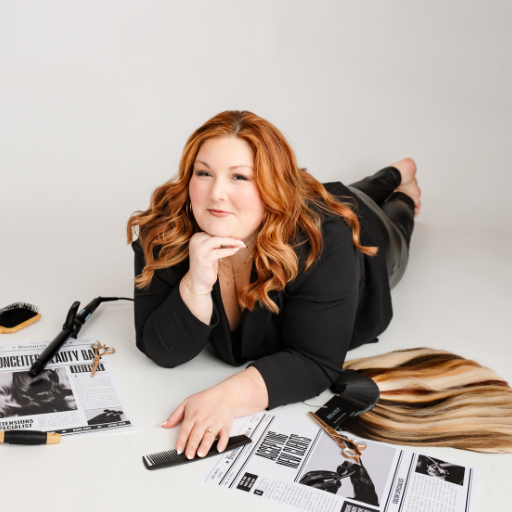
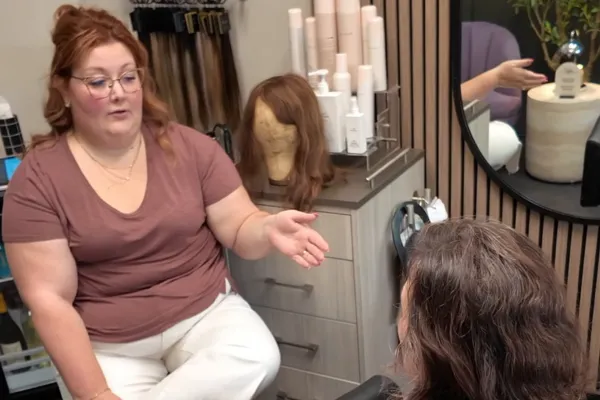
I'm Brooke Chhina, a licensed cosmetologist, cosmetology educator, hair restoration specialist, and trichology student (IAT) in Lancaster, PA.
Trichotillomania Recovery is one of the six hair-change contexts within The 6-Cause Restoration Method™.
And the goal of this article is not to convince you that I have to be your stylist.
It is to help you know what to look for wherever you live.
First, the scope
I'm a licensed cosmetologist, cosmetology educator, hair restoration specialist, and trichology student, not a physician or mental health professional.
The behavioral side of trichotillomania belongs with a qualified mental health professional.
Habit-reversal-based behavioral therapy is one of the best-supported treatment approaches for trichotillomania.
This article is about professional hair care during recovery, not treatment for the condition itself.
Why the right stylist matters
Choosing a stylist usually involves skill, aesthetic, personality, and trust.
When you're navigating trichotillomania, a few additional things may matter.
Privacy
Your scalp may have visible areas affected by pulling.
You get to decide how much you want to discuss and how you want that conversation handled.
Some clients want to explain everything.
Some want to acknowledge it once and move on.
Some would prefer that the stylist simply work around the area without repeatedly commenting on it.
A respectful professional should be able to follow your lead.
How the affected areas are handled
Areas with short regrowth, breakage, or reduced density may require a different approach to detangling, styling, heat, or tension.
That does not mean every short new hair is inherently damaged.
It means the stylist should work according to the condition of the hair actually present.
Styling around visible density changes
A haircut, part placement, layering, styling direction, or strategic volume can sometimes make a visible difference in how an affected area looks.
A thoughtful stylist works with your current density instead of pretending you have the same hair you had before.
The emotional part of sitting in the chair
You do not need someone to turn your appointment into therapy.
You do need someone who can handle sensitive information professionally.
Questions to ask before you book
"Have you worked with clients who have trichotillomania or visible hair loss?"
Experience is helpful.
But I would not automatically reject someone who has never worked with trichotillomania specifically.
Listen to how they respond.
Are they respectful?
Curious without being intrusive?
Comfortable discussing modifications?
That may tell you more than a yes-or-no answer.
"How do you work with clients who have visible thinning or affected areas?"
You want to hear that they assess what is actually present rather than automatically treating every section the same.
"Are you comfortable working around short regrowth, breakage, or reduced density?"
This gives them an opportunity to explain how they would adjust detangling, heat, styling, or chemical services around an affected area.
"Can I tell you about my hair before the appointment?"
A private note, consultation form, phone call, or message can make the first appointment much easier.
You should not have to explain something personal for the first time while sitting in the middle of a busy room if you do not want to.
"Can you help me choose a cut or style around the density I have now?"
This is especially useful if camouflage is one of your goals.
"What is your studio or salon environment like?"
Some people are completely comfortable in an open salon.
Others prefer a private studio.
Neither preference is wrong.
Knowing before you book gives you control over the environment.
"Do you offer a consultation before the service?"
A consultation can be especially valuable if you're considering something beyond a straightforward haircut or style.
Red flags I would pay attention to
They react with shock, pity, or judgment
You should not leave a hair appointment feeling as though you revealed something shameful.
They immediately try to diagnose you
A stylist should not tell you what psychiatric or medical condition you have.
They start recommending medications or supplements
Those conversations belong with appropriately licensed medical professionals.
They dismiss what you're experiencing
"It's not even noticeable" may sound reassuring.
It can also feel dismissive.
They recommend an extension or topper before assessing your hair
The right cosmetic method depends on the hair, support pattern, coverage need, and your goals.
They promise "damage-free," "zero tension," or "completely safe" restoration
Those are promises I would be cautious about.
Installed systems that rely on natural hair for support involve some mechanical load.
The important question is how that support is designed and maintained.
They offer advanced services they cannot clearly explain
If someone offers extensions, custom toppers, or integration systems, ask about their education and experience with the specific method.
The title someone uses matters less than whether they can clearly explain what they do, how the system is supported, and how they reassess the natural hair.
Green flags
A good fit may:
ask thoughtful questions
respect your privacy
explain before touching or sectioning sensitive areas
modify the service around the hair present
understand the difference between cosmetic coverage and medical treatment
know when something should be referred to a dermatologist
be willing to say a service is not appropriate
explain their education and experience with any advanced service they offer
make you feel comfortable speaking up during the appointment
What a good first appointment can feel like
You should be able to explain any sensitivities or preferences before the service begins.
You should know what is being done.
If something feels uncomfortable, you should be able to say so.
And the stylist should be willing to adjust.
The goal is not a perfectly scripted appointment.
It is an appointment where you feel respected and where the service is designed around the hair you actually have.
When cosmetic hair restoration is part of the conversation
A haircut or styling appointment and an integrated hair restoration service are not the same thing.
If you're considering:
a custom hair topper
Meshless Integration
Mesh Integration
hair extensions
a combination approach
look for a professional with appropriate licensing where required and specific education and experience in the service being offered.
You should be able to ask:
What is the actual hairpiece?
How is it supported?
What natural hair participates in the foundation?
How is that hair reassessed?
What happens if my hair changes?
If those answers are vague, keep asking questions.
If you're considering coverage specifically, my Trichotillomania Bald Spot Coverage guide explains the approach I use.
For the broader regrowth and restoration conversation, read my trichotillomania cornerstone.
If this is you
If you're looking for a hair restoration specialist in Lancaster, PA, and cosmetic coverage is part of what you're considering, Begin Your Discovery.
The Discovery is an in-studio consultation in my private Lancaster studio.
I review your hair and scalp, visible density, pulling history, natural hair available for support, coverage needs, lifestyle, maintenance preferences, and cosmetic goals.
From there, I create your personalized Restoration Roadmap and send it to your phone.
Your Roadmap may include:
a custom hair topper with Meshless Integration
a custom hair topper with Mesh Integration
hair extensions if length or fullness through unaffected hair is also a goal
a combination of topper-based restoration and extensions
a cosmetic hair-care plan while your recovery continues
a recommendation to connect with a dermatologist or mental health professional first and return to me afterward
Your Restoration Roadmap is yours to keep whether or not you continue with me.
I work by application only.
And if you're nowhere near Lancaster, use the questions in this article.
You deserve a stylist who can work with your hair without making you feel like you need to explain or apologize for it.
I'm Brooke Chhina, a licensed cosmetologist, cosmetology educator, hair restoration specialist, and trichology student (IAT) in Lancaster, PA, and the creator of The 6-Cause Restoration Method™. I'm not a medical doctor or mental health professional. For diagnosis, treatment, or care of any medical or mental health condition, please consult an appropriately licensed professional. Cosmetic hair restoration runs alongside medical and mental health care, never in place of it.
Conceited Beauty Bar · Sola Salons Studio 9A · 1500 Gilbert Way, Lancaster, PA 17601
Crowned in Confidence · Your Beauty, Elevated.