When Does GLP-1 Hair Shedding Stop?
You're not at the beginning of this anymore.
You've already noticed the shedding.
You've already Googled whether Ozempic, Wegovy, Mounjaro, Zepbound, or another GLP-1 medication could have something to do with it.
Now you want the answer everyone actually wants:
When does this stop?
The frustrating answer is that there is not one universal GLP-1 hair-loss calendar.
But there is a recognizable hair-cycle pattern that can help you understand why shedding often appears months after the original trigger, what recovery may look like, and when your timeline deserves a closer medical look.
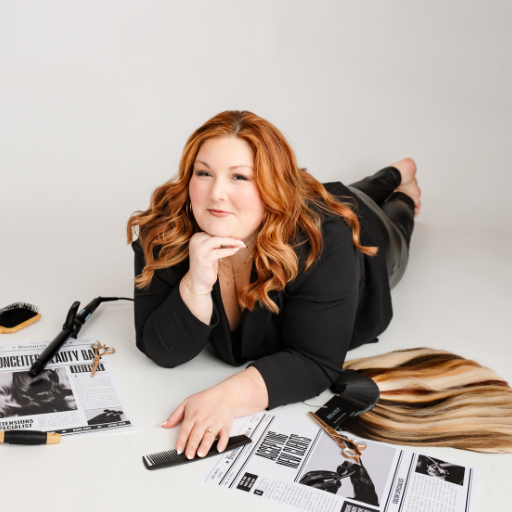
I'm Brooke Chhina, a licensed cosmetologist, cosmetology educator, hair restoration specialist, and trichology student (IAT) in Lancaster, PA.
GLP-1 & Medication is one of the six contributing causes I built The 6-Cause Restoration Method™ around.
If you want the bigger picture on why hair loss may happen while taking a GLP-1 medication, start with my GLP-1 hair loss guide.
This article is about the timeline.
The short answer
If the shedding you're experiencing is telogen effluvium, it often becomes noticeable a few months after the triggering change.
The heavy-shedding period may last for several months, and visible recovery takes longer because newly growing hair needs time to gain length.
That does not mean every person taking a GLP-1 will follow the same schedule.
And it does not mean every case of hair loss while taking one is telogen effluvium.
The timeline depends on:
whether weight is still changing rapidly
whether calorie or protein intake has dropped significantly
whether another physiologic stressor is happening at the same time
hormonal changes
nutritional status
thyroid or iron concerns
underlying female pattern hair loss
another medical hair-loss condition
That is why I want you to think in stages, not exact months.
First, the scope
I'm not a doctor or prescriber.
Any decision about starting, stopping, changing, tapering, or adjusting a GLP-1 medication belongs with the medical provider managing that medication.
Current research supports an association between GLP-1 receptor agonists and hair loss.
Researchers are still working out exactly why.
Rapid or substantial weight loss appears to be one possible contributor.
Reduced food intake and inadequate protein or nutrient intake may also play a role.
Researchers are also exploring whether GLP-1 medications themselves may directly affect hair growth.
So I do not tell clients:
"Your medication definitely caused this."
I look at the medication as one potential contributor within the bigger picture of what was happening in the months before the shedding began.
My cosmetic hair restoration work runs alongside medical care, never in place of it.
Why the shedding can feel delayed
Hair does not respond to a trigger the same day the trigger happens.
That is one of the reasons telogen effluvium can be so confusing.
Hair moves through several stages:
Anagen is the active growth phase.
Catagen is a short transition phase.
Telogen is the resting phase.
Exogen is when the resting hair is released and sheds.
With telogen effluvium, a physiologic stressor causes more hairs than usual to leave the active growth phase and enter the resting cycle.
Those hairs do not immediately fall out.
There is a delay.
That is why the event that contributed to your shedding may have happened several months before you started noticing hair in the shower.
A more realistic GLP-1 shedding timeline
Instead of assigning every woman a strict month-by-month schedule, I use this general pattern.
Stage 1: The trigger happens
This is the period when something changes in the body.
That might include:
rapid weight loss
a substantial change in food intake
inadequate protein intake
illness
surgery
postpartum hormonal changes
major psychological stress
medication changes
more than one of these at the same time
If you're taking a GLP-1, the medication may be part of that context.
You probably do not notice shedding yet.
Stage 2: The delayed shed begins
Several weeks to a few months later, you may start noticing:
more hair in the shower
more hair in your brush
strands on your clothing
a smaller-feeling ponytail
more visible scalp through the part
This delay is characteristic of telogen effluvium.
It is also why people sometimes struggle to connect the shedding to what happened earlier.
Stage 3: The heavy-shedding period
For some people, the shedding becomes dramatically more noticeable before it begins to improve.
This is often the most emotionally difficult part.
You may feel like every wash day is proof that you're getting worse.
But the amount of hair you see on one day does not tell you exactly what your density will look like months from now.
If the original physiologic stressor has resolved, telogen effluvium commonly improves over time.
If the trigger is still ongoing, or another trigger has been added, the shedding may persist longer.
Stage 4: The shed begins to settle
You may notice that the amount of hair in your brush or shower is no longer as dramatic as it was at the peak.
It may not return to your old baseline overnight.
The important change is the trend.
You're seeing less than you were before.
That tells me more than whether you're at "month six" or "month eight."
Stage 5: Regrowth becomes visible
Short new hairs may begin appearing around:
the hairline
temples
part
crown
They may stick straight up.
They may be annoying to style.
They are also often one of the first visible signs that the hair cycle is moving forward.
Stage 6: Visual density catches up
This is the slow part.
Even after the shedding settles, the new hair has to physically grow long enough to contribute to your visible density and shape.
That is why you can feel like the shed is over but your hair still does not look "back" yet.
Recovery of appearance takes longer than recovery of shedding.
So how many months are we actually talking about?
There is no GLP-1-specific number I can responsibly promise you.
For classic acute telogen effluvium, excessive shedding often lasts for several months once it becomes noticeable.
Visible recovery takes longer.
What I do not want to tell you is:
"Month 3 is the peak, month 6 is the slowdown, and by month 18 you're fully recovered."
Your body does not know what month number is printed on a blog post.
The better question is:
Is the shedding trending down, staying the same, or continuing to get worse?
That is much more useful clinically and cosmetically.
What can make the shedding last longer?
This is where GLP-1 hair loss often becomes more complicated.
Sometimes the medication is only one part of the story.
Ongoing rapid weight loss
A significant change in body weight is itself a physiologic stressor.
If weight is still dropping rapidly, the body may still be adapting.
Reduced calorie or protein intake
GLP-1 medications can dramatically suppress appetite.
If intake drops enough that you're consistently under-fueling or struggling to get adequate protein and nutrients, that may contribute to ongoing hair-cycle stress.
Postpartum changes
Postpartum telogen effluvium has its own timeline.
If you begin a GLP-1 while your postpartum hair cycle is still readjusting, those factors can overlap.
Perimenopause or menopause
Hormonal changes may affect hair density independently of a GLP-1.
A woman can be experiencing more than one cause of hair change at the same time.
Thyroid or iron issues
Diffuse shedding can have multiple contributing factors.
If your timeline is not following the pattern you expected, medical evaluation may be appropriate rather than assuming every strand is "Ozempic hair loss."
Female pattern hair loss
Telogen effluvium can make an underlying pattern of thinning more noticeable.
If your overall shedding improves but your part continues to widen or crown remains visibly thinner, I want that pattern evaluated rather than assuming you simply need more time.
Does the shedding stop if you stay on the medication?
It can.
Staying on a GLP-1 does not automatically mean your hair will continue shedding indefinitely.
AAD notes that dermatologists believe sudden weight loss may contribute to the thinning seen in some GLP-1 users, while researchers are still investigating other possible mechanisms.
So if your weight, food intake, and overall health become more stable, the hair cycle may also settle even while the medication continues.
But there is no guarantee.
If shedding remains substantial, recurrent, or unexplained, bring it to your physician or dermatologist.
Does stopping the GLP-1 make your hair grow back faster?
Not necessarily.
And this is not a decision I want you making from a hair blog.
If hairs have already entered the resting portion of the cycle, changing your medication today does not instantly reverse that process.
Your prescriber needs to weigh the medical benefits of the medication against any side effects or concerns you're experiencing.
Do not stop or change a GLP-1 medication solely because of hair shedding without talking to the person prescribing it.
How do you know the shedding is improving?
I look for trends.
Your daily shedding is meaningfully lower
You do not need to count hairs.
You are looking for a noticeable shift from the worst period.
The drain looks different.
The brush looks different.
Wash day feels different.
The pattern is becoming more stable
Your density is no longer changing rapidly from one appointment to the next.
You see regrowth
Short hairs around the hairline or part can be encouraging.
But regrowth alone does not prove that every cause of hair loss has resolved.
You stop seeing a steady decline in visible density
This matters.
If the excessive shedding improves but the part keeps widening, the crown continues thinning, or you develop a distinct pattern of loss, that deserves another look.
When should you talk to your doctor or dermatologist?
I would involve a physician or board-certified dermatologist if:
shedding remains substantial and is not trending downward
the shedding repeatedly improves and then becomes heavy again
your part or crown continues to become more visible
the loss is patchy instead of diffuse
you have scalp redness, scaling, burning, tenderness, pain, or significant itching
you have significant fatigue, temperature sensitivity, unexplained symptoms, or other health changes
you have a family history of female pattern hair loss
you cannot identify a likely trigger
the pattern does not make sense for ordinary telogen effluvium
If your doctor thinks bloodwork is appropriate, ask whether thyroid testing and ferritin should be included rather than assuming a standard panel covers everything relevant to hair shedding.
Your physician can decide which tests make sense based on your history and symptoms.
What actually helps while you're shedding?
There is no product that simply shuts off telogen effluvium.
The useful things are much less glamorous.
Adequate nutrition
If appetite suppression has significantly changed how much you're eating, talk with your medical provider about whether you're meeting your nutritional needs.
Protein matters.
Adequate total intake matters.
And if a deficiency is suspected, that belongs with appropriate medical evaluation rather than guessing with supplements.
Gentle hair care
Avoid repeatedly pulling the hair tightly.
Limit unnecessary mechanical stress.
Be gentle when detangling.
Use products and styling choices that make the hair easier to manage while density is changing.
Appropriate medical evaluation
If the pattern is unusual or prolonged, do not keep buying hair-growth products hoping one of them will fix something that needs a diagnosis.
Patience
Not the answer anyone wants.
But hair growth is slow.
Even when the cycle has improved, visible recovery takes time.
What about biotin and hair-growth supplements?
Biotin is not a universal treatment for hair shedding.
Most people are not biotin deficient, and high-dose biotin can interfere with certain laboratory tests.
That does not mean every supplement is useless.
It means supplements should address an actual need rather than being treated as a shortcut around understanding why you're shedding.
If you're worried about nutritional deficiency, talk with your physician.
Where cosmetic hair restoration fits
Most people experiencing temporary telogen effluvium will not need an installed cosmetic restoration system.
Sometimes the right recommendation is simply:
Wait. Let the shedding settle. Reassess.
During substantial active shedding, I generally do not install an integrated extension or topper system because I want stable natural hair available to support the foundation or added hair.
I do not determine readiness by saying:
"You're at month seven, so you're ready."
I look at the actual support hair.
When extensions may become an option
Hair extensions add length and fullness through existing hair.
They may become part of the conversation once the natural hair is stable enough and there is sufficient structural support in the areas where the extensions would be placed.
That decision depends on:
current shedding
density
structural strength
placement
cosmetic goals
maintenance
lifestyle
If the biggest concern is loss of length or fullness through hair that otherwise has adequate coverage, extensions may make sense.
When a custom topper may make more sense
If the concern is visible density through the part, crown, or top, extensions may not solve the actual problem.
A custom hair topper provides targeted coverage.
When a topper is appropriate, it may be supported through Mesh Integration or Meshless Integration.
Mesh Integration
With Mesh Integration, breathable mesh is laid over the appropriate area.
Natural hair is fed through the mesh and secured with beads through or on the mesh foundation.
The custom topper is then sewn onto the completed foundation.
Meshless Integration
Meshless Integration uses a customized beaded-only foundation created from natural hair with sufficient structural strength to support the topper.
No mesh layer is used.
The topper is sewn onto that completed foundation.
The choice between them depends on support hair, structural strength, coverage area, comfort, lifestyle, maintenance, and cosmetic goals.
It is not determined by how many months you have been taking a GLP-1.
Why I don't use clip-in toppers during significant shedding
I do not use clip-in toppers or snap-on hairpieces in my cosmetic restoration work.
Repeated tension can begin as a potentially reversible, non-scarring process but may become permanently scarring when tension continues over time.
That does not mean every clip-in wearer will develop traction alopecia.
It means I prefer to plan support intentionally, especially when the natural hair has recently been through a substantial shedding cycle.
Where The Discovery fits
If you're somewhere in this process and want to understand what your hair can currently support, The Discovery is where I begin.
The Discovery is an in-studio consultation and the first step in The 6-Cause Restoration Method™.
I review:
your hair and shedding history
GLP-1 timeline
visible density pattern
scalp
natural hair available for support
structural strength
lifestyle
maintenance preferences
cosmetic goals
other factors that may be contributing to what you're seeing
I identify what may be contributing within my scope and tell you when something belongs with a physician or dermatologist first.
From there, I create your personalized Restoration Roadmap.
Your Roadmap may include:
a custom hair topper with Meshless Integration
a custom hair topper with Mesh Integration
hair extensions if length or fullness is the primary goal
a combination of topper-based restoration and extensions
a cosmetic hair-care plan while your natural hair recovers
a recommendation to see a dermatologist first and return to me afterward
Your Restoration Roadmap is sent to your phone and is yours to keep whether or not you continue with me.
Sometimes the answer is restoration.
Sometimes the answer is medical evaluation.
And sometimes the best recommendation is simply:
Your hair needs more time.
If you're in Lancaster, PA, or traveling in for cosmetic hair restoration, Begin Your Discovery.
I work by application only.
I'm Brooke Chhina, a licensed cosmetologist, cosmetology educator, hair restoration specialist, and trichology student (IAT) in Lancaster, PA, and the creator of The 6-Cause Restoration Method™. I'm not a medical doctor or prescriber. For diagnosis or treatment of medical conditions affecting your hair, scalp, or general health, or for decisions regarding GLP-1 medication, please consult the appropriate licensed medical provider. Cosmetic hair restoration runs alongside medical care, never in place of it.
Conceited Beauty Bar · Sola Salons Studio 9A · 1500 Gilbert Way, Lancaster, PA 17601
Crowned in Confidence · Your Beauty, Elevated.