What Causes Traction Alopecia? Signs, Habits & What to Change
You've noticed something changing at your hairline.
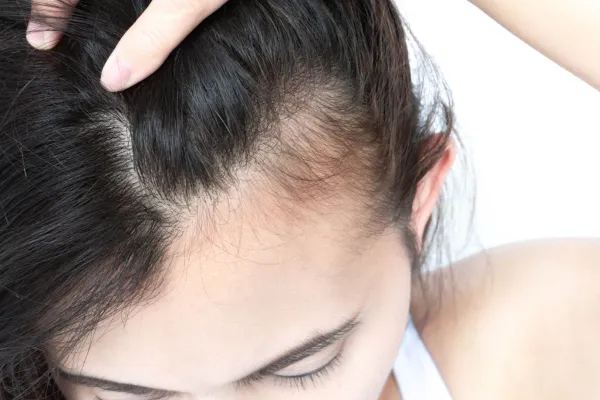
Maybe your temples look thinner.
Maybe the edges around a style you wear frequently no longer look as dense as they used to.
Maybe you're seeing short broken hairs in the same area over and over.
And now you're wondering whether the way you wear your hair could be contributing.
It can.
Repeated pulling or mechanical tension on the hair can contribute to a form of hair loss called traction alopecia.
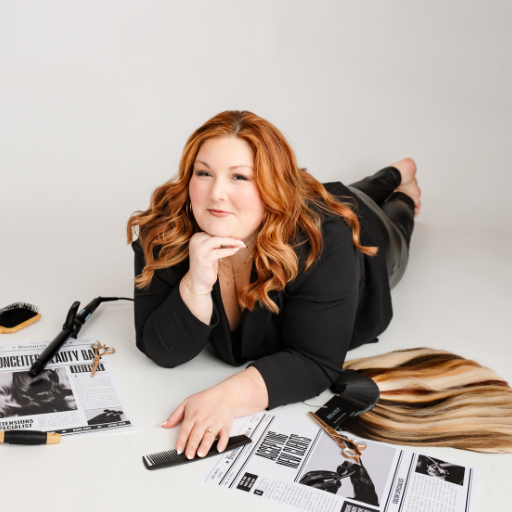
I'm Brooke Chhina, a licensed cosmetologist, cosmetology educator, hair restoration specialist, and trichology student (IAT) in Lancaster, PA.
Mechanical & Chemical Damage is one of the six contributing causes I built The 6-Cause Restoration Method™ around, and traction-related hair loss sits within that cause.
Let's talk about what can contribute to traction alopecia, what warning signs deserve attention, what you can change, and where a dermatologist or cosmetic hair restoration may fit.
First, the scope
I'm a licensed cosmetologist, cosmetology educator, hair restoration specialist, and trichology student, not a physician or dermatologist.
My trichology education allows me to recognize hair and scalp patterns, understand the science behind many forms of hair change, identify factors that may be contributing to what you're experiencing, and know when something belongs with a medical provider.
It does not allow me to diagnose traction alopecia or another medical condition.
A board-certified dermatologist is the appropriate person to determine what type of hair loss is present and whether treatment is needed.
My cosmetic restoration work runs alongside medical care, never in place of it.
What traction alopecia is
Traction alopecia is hair loss associated with repeated or prolonged pulling on the hair.
The important word is:
repeated.
One ponytail does not automatically create traction alopecia.
One set of braids does not automatically create traction alopecia.
One extension installation does not automatically create traction alopecia.
The concern is a pattern of mechanical stress that repeatedly loads the same hair or scalp areas over time.
Repeated tension can begin as a potentially reversible, non-scarring process but may become permanently scarring when tension continues over time.
That is why recognizing the pattern early matters.
What can cause traction alopecia?
Frequently wearing tight ponytails, buns, or updos
When the hair is repeatedly pulled tightly in the same direction, the same areas can experience ongoing mechanical stress.
The hairline and temples are common places to notice changes.
Tight braids or cornrows
Braids themselves are not automatically harmful.
The concern is tension.
If a braided style feels painful, produces prolonged scalp tenderness, or pulls significantly at the hairline, that deserves attention.
Slicked-back styles
A sleek style is not automatically a problem.
But frequently pulling the hair tightly away from the face can repeatedly load the hair around the front and temples.
Extensions and weaves
Extensions can contribute to traction when the natural hair is exposed to more tension or weight than it can appropriately support.
That is why method selection, placement, density, maintenance, and the natural hair available for support matter.
Extensions themselves are not synonymous with traction alopecia.
But they should never be treated as though every head of hair can support the same installation.
Clip-in extensions or toppers
Clips repeatedly grip relatively small areas of hair.
When the same attachment points are used frequently, those areas can experience repeated mechanical load.
That is one reason I do not use clip-in toppers or snap-on hairpieces in my cosmetic restoration work.
Hair accessories
Combs, clips, elastics, headbands, or other accessories can contribute to repetitive stress if they consistently grip or pull the same area.
Head coverings combined with tension or friction
Head coverings themselves are not inherently a cause of hair loss.
But repeated rubbing or friction, particularly when hair underneath is also pulled tightly, may contribute to traction in some situations.
Where traction alopecia may appear
Traction-related hair loss often corresponds with areas repeatedly exposed to tension.
That can include:
the temples
the frontal hairline
areas along tightly braided styles
attachment areas
other regions repeatedly pulled by a particular hairstyle
But location alone does not diagnose traction alopecia.
Several forms of hair loss can affect the hairline, temples, crown, or other areas.
If the pattern is progressive or unclear, medical evaluation matters.
Warning signs worth paying attention to
You may notice:
Persistent tenderness after styling
Pain or ongoing tenderness around a hairstyle is a reason to reduce the tension.
Redness or bumps
Visible irritation around areas under repeated tension deserves attention.
Breakage
Short, uneven hairs can reflect shaft breakage.
But breakage by itself does not prove traction alopecia.
Reduced density in a repeated tension zone
If the same area repeatedly carries a tight style and gradually looks less dense, that pattern is worth addressing.
Changes along the hairline
A hairline that appears to be changing should not automatically be blamed on styling.
Traction is one possibility.
Other causes of hair loss can affect similar areas.
Smooth or shiny areas
If an area becomes smooth, shiny, or appears to have fewer visible follicular openings, see a dermatologist.
That can be a sign that a scarring process needs medical evaluation.
What to change if you're concerned about tension
Reduce how tightly the hair is being worn
If a style causes pain or obvious pulling, loosen it.
Change styles
Frequently changing how the hair is positioned can reduce repeated loading of exactly the same areas.
Give tension-heavy styles a break
If your hair or scalp is showing signs of stress, continuing the same style without reassessment is not the answer.
Pay attention during braiding
A style does not need to hurt in order to be secure.
If braids or twists are causing significant pain, speak up.
Reassess extensions if the natural hair is changing
If you're wearing extensions and noticing:
reduced density
breakage
discomfort
significant tension
changes around attachment areas
have the installation assessed by an appropriately trained professional.
Reconsider repetitive clip placement
If you wear clip-in pieces regularly, inspect the hair where those clips repeatedly attach.
If the density or condition of that hair is changing, it is worth reconsidering how the piece is being worn.
When to see a dermatologist
You do not need to wait until an area looks completely bare.
Consider seeing a board-certified dermatologist if:
thinning is continuing
you're unsure whether traction is actually the cause
your scalp is persistently tender, inflamed, or irritated
you have scaling or burning
you notice smooth or shiny areas
follicular openings appear reduced
your hairline is changing progressively
removing the suspected tension has not improved the pattern
you are interested in medical treatment
The earlier you know what you're dealing with, the better informed your next decision can be.
Can traction alopecia grow back?
Sometimes.
When traction-related hair loss has not progressed to permanent follicular scarring, regrowth may be possible after the source of tension is removed.
But I would not promise that every early-looking area will completely recover.
And I would not assume an area is permanently lost simply because it has not filled in yet.
A dermatologist can evaluate the scalp and determine what is happening.
When scarring permanently destroys follicles, those follicles generally cannot produce normal hair again.
That distinction is why medical evaluation matters.
Where cosmetic hair restoration fits
Cosmetic restoration is not the first answer to every case of traction-related hair loss.
If reducing the source of tension allows natural density to recover, you may never need a restoration system.
For someone with persistent visible density loss, however, cosmetic coverage may become part of the conversation.
That may include a custom hair topper.
The custom topper is the actual hairpiece providing targeted coverage.
It may be supported by either Meshless Integration or Mesh Integration depending on the natural hair available.
Meshless Integration
Meshless Integration uses a customized beaded-only foundation.
There is no mesh layer.
Natural hair with sufficient structural strength is used to create the foundation, and the custom hair topper is sewn onto it.
Mesh Integration
Mesh Integration begins with a breathable mesh foundation.
Natural hair is carefully fed through the mesh and secured with beads through or on the mesh foundation.
The custom hair topper is then sewn onto the completed structure.
Mesh Integration may be considered when additional foundation structure is appropriate for the natural hair available.
Neither method is chosen simply because the hair loss is labeled mild, moderate, or advanced.
I look at:
natural hair available for support
structural strength
coverage area
comfort
lifestyle
maintenance
cosmetic goals
What about extensions after traction-related hair loss?
Hair extensions may still be an option for some people.
But they should be selected around the natural hair that exists today.
If an area has reduced density or is currently showing signs of stress, I am not going to treat that area as though it has the same support capacity it once had.
Extensions primarily add length and fullness through existing hair.
They do not replace missing scalp coverage.
If the main concern is a visible area through the crown, part, or hairline, a custom topper may address that problem more directly.
If this is you
If you're noticing changes in areas where your hair has experienced repeated tension and you want to understand what cosmetic options may fit the hair you have now, Begin Your Discovery.
The Discovery is an in-studio consultation in my private Lancaster, PA studio.
I review:
your hair history
styling history
what you've noticed changing and when
visible density
your scalp
areas where tension may have occurred
natural hair available for support
structural strength
coverage, length, and fullness goals
lifestyle
maintenance preferences
which contributing causes within The 6-Cause Restoration Method™ may be relevant to your hair story
I do not diagnose traction alopecia.
If the pattern needs medical evaluation first, I will tell you.
From there, I create your personalized Restoration Roadmap and send it to your phone.
Your Roadmap may include:
a custom hair topper with Meshless Integration
a custom hair topper with Mesh Integration
hair extensions if appropriate support hair is available and length or fullness is a goal
a combination of topper-based restoration and extensions
a cosmetic hair-care plan while the natural hair changes
a recommendation to see your dermatologist first and return to me afterward
Your Restoration Roadmap is yours to keep whether or not you continue with me.
I work by application only.
Repeated tension is easy to overlook because the styling habit itself may feel completely normal.
But when your hair begins to change in the same places that repeatedly carry that tension, it is worth paying attention.
I'm Brooke Chhina, a licensed cosmetologist, cosmetology educator, hair restoration specialist, and trichology student (IAT) in Lancaster, PA, and the creator of The 6-Cause Restoration Method™. I'm not a medical doctor. Medical diagnosis, laboratory testing, prescription medication, and treatment of conditions affecting the hair, scalp, or general health belong with a licensed physician or board-certified dermatologist. My cosmetic restoration work can take place alongside your medical care.
Conceited Beauty Bar · Sola Salons Studio 9A · 1500 Gilbert Way, Lancaster, PA 17601
Crowned in Confidence · Your Beauty, Elevated.