Hair Breakage vs. Shedding: How to Tell the Difference
You're finding more hair than you remember finding before.
In the shower.
In your brush.
On your clothing.
Around the bathroom.
And before you decide what to do about it, you need to figure out what you're actually seeing.
Because hair shedding and hair breakage are not the same thing.
One involves a hair leaving the follicle as part of the hair cycle.
The other involves the hair shaft breaking somewhere along its length.
And sometimes both are happening at the same time.
I'm Brooke Chhina, a licensed cosmetologist, cosmetology educator, hair restoration specialist, and trichology student with the International Association of Trichologists (IAT) in Lancaster, PA.
Mechanical & Chemical Damage is one of the six contributing causes I built [The 6-Cause Restoration Method™](/the-method) around, and breakage sits within that cause.
Let's look at the clues that can help you understand what you're seeing.
First, the scope
I'm a licensed cosmetologist, cosmetology educator, hair restoration specialist, and trichology student, not a physician or dermatologist.
My trichology education allows me to recognize hair and scalp patterns, understand the science behind many forms of hair change, identify factors that may be contributing to what you're experiencing, and know when something belongs with a medical provider.
It does not allow me to medically diagnose the cause of hair loss.
Persistent, unexplained, patterned, or substantial shedding belongs with a physician or board-certified dermatologist.
My cosmetic hair restoration work can take place alongside medical care, never in place of it.
The short answer
Shedding means a hair has released from the follicle.
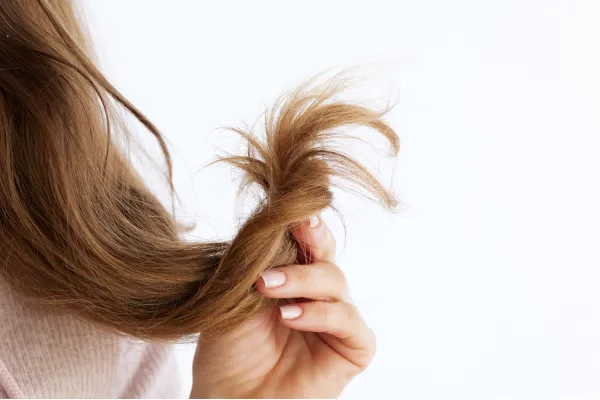
Breakage means the hair shaft has snapped somewhere along its length.
A shed hair is often close to the full length of that individual strand.
A broken piece may be much shorter.
A shed telogen hair may also have a small club-shaped root at one end, which can appear pale or whitish.
But no single bathroom test is perfect.
Short hairs can be breakage.
They can also be new growth.
And a tiny root at one end may be difficult to see without magnification.
So instead of trying to diagnose your hair from one strand, look at the overall pattern.
A quick look at the hair cycle
Hair grows through a repeating cycle.
The main stages are:
anagen, the active growth phase
catagen, the transitional phase
telogen, the resting phase
exogen, the shedding phase
Normal shedding happens every day.
Dermatologists commonly describe roughly 50 to 100 hairs per day as a normal range, although what you visibly notice can vary based on hair length, texture, wash frequency, styling habits, and how often shed hairs are released.
When more hairs than usual move through the resting and shedding phases around the same period, shedding may become much more noticeable.
Breakage is different.
Breakage happens to the hair shaft itself.
It is not a hair-cycle stage.
Clues that may point toward shedding
The strand is close to its full length
If a hair is released from the follicle, the strand may be approximately as long as the hair that was growing in that area.
That is different from finding numerous much shorter fragments.
You may see a small club-shaped root
Telogen hairs commonly have a small keratinized club at the root end.
It may appear pale or white.
But this is not a perfect at-home diagnostic test.
You're noticing more full-length strands
A larger amount of full-length hair in the shower, brush, or on clothing may point more toward shedding than shaft breakage.
The overall density may be changing
Excessive shedding can eventually make the ponytail feel smaller or make the scalp more visible.
But the visible pattern depends on what is causing the shedding.
Diffuse shedding is common in telogen effluvium, while other hair-loss conditions can produce different patterns.
Clues that may point toward breakage
You're finding noticeably shorter pieces
If your hair is long but you're repeatedly finding pieces that are much shorter than your overall length, shaft breakage may be part of the picture.
The ends look frayed, split, or irregular
Broken hairs may show signs of damage along the shaft or ends.
Breakage corresponds with a stress point
You may notice more breakage:
where an elastic repeatedly sits
in heavily lightened areas
where heat is used most frequently
around areas that are repeatedly brushed or manipulated
near extension or styling attachment areas
You see uneven short hairs
Short hairs deserve context.
They may be:
new growth
breakage
hairs of naturally different lengths
a combination of more than one thing
That is why I would not look at a halo of short hairs and automatically label it breakage.
What can contribute to shedding?
There are many possible reasons someone may experience increased hair shedding.
Postpartum changes
Noticeable shedding commonly occurs after pregnancy as the hair cycle shifts postpartum.
If you're navigating that, read my [Postpartum Hair Loss guide](/post/postpartum-hair-loss).
GLP-1 use, weight change, and other factors
Hair shedding has been reported in people using GLP-1 medications.
Research is still working through the exact relationship.
Rapid weight loss, reduced caloric intake, nutritional changes, and other physiologic factors may contribute in some people.
You can read more in my [GLP-1 Hair Loss guide](/post/glp-1-hair-loss-ozempic-wegovy).
Hormonal transitions
Postpartum changes, perimenopause, menopause, thyroid-related conditions, and androgen-related conditions may all be relevant to someone's hair story.
That does not mean hormones explain every case of shedding.
Illness or surgery
A significant physiologic stressor such as illness, high fever, or surgery can sometimes be followed by increased shedding.
Nutritional factors
Iron status, inadequate overall nutrition, and other nutritional issues may contribute to hair changes in some people.
If your doctor thinks bloodwork is appropriate, ask whether thyroid testing and ferritin should be included rather than assuming a standard panel covers everything relevant to hair shedding.
Your physician can determine which tests make sense based on your history and symptoms.
Medications
Some medications can be associated with hair shedding.
Do not stop a prescription medication because you suspect it is affecting your hair.
Discuss that concern with the clinician who prescribed it.
Female pattern hair loss
Female pattern hair loss is not simply another version of temporary shedding.
It involves progressive follicular miniaturization and often shows as a widening part or reduced density through the top and crown.
Some people can have pattern hair loss and increased shedding at the same time.
Read my [Female Pattern Hair Loss guide](/post/female-pattern-hair-loss) for that distinction.
What can contribute to breakage?
Breakage usually tells me to look at what has happened to the hair shaft.
Chemical processing
Lightening, permanent color, relaxers, perms, and other chemical processes alter the hair structure.
Repeated or overlapping chemical services can increase the risk of breakage.
Heat
Frequent or excessive heat can weaken the hair shaft over time.
That includes flat irons, curling irons, and high-temperature blow-drying.
Mechanical handling
Hair can break from repetitive physical stress.
That may include:
aggressive detangling
rough brushing
friction
repeated backcombing
tight elastics
repeated tension
styling the same area in the same way over and over
Tight styles
Tight ponytails, buns, braids, and other styles can contribute to shaft breakage.
When repeated tension begins affecting the follicle itself, the conversation moves beyond breakage and into the possibility of [traction alopecia](/post/traction-alopecia-hair-loss).
Extensions
Extensions can contribute to breakage when the attachment, weight, placement, maintenance, or natural support hair is not appropriate.
That does not mean extensions automatically damage the hair.
It means the extension plan needs to be built around the natural hair available.
Chemical damage plus mechanical stress
Often there is not one isolated cause.
Hair that has been heavily lightened may tolerate mechanical stress differently than untreated hair.
Hair exposed to repeated heat may then be more vulnerable to aggressive brushing.
The layers can compound.
What if both are happening?
This is common.
Someone may experience increased shedding and respond by styling differently because the hair suddenly feels thinner.
Maybe she starts wearing tighter ponytails.
Maybe she uses more heat to create volume.
Maybe she adds extensions.
Now there may be a shedding problem and a breakage problem happening simultaneously.
That is why counting hairs in the shower rarely tells the whole story.
I want to know:
when the changes started
what the strands look like
where density has changed
whether the hair shaft itself looks compromised
what chemical services have been performed
how the hair is styled
whether scalp symptoms are present
whether another medical or hormonal factor may be relevant
When a dermatologist should be part of the conversation
Consider medical evaluation if:
shedding is substantial or persistent
the pattern is continuing to change
you have defined areas of hair loss
your part or crown is becoming more visible
your hairline is changing
you have redness, scaling, tenderness, burning, or inflammation
you notice smooth or shiny areas of scalp
you have other health symptoms alongside the hair changes
you simply cannot tell what is happening
A dermatologist can distinguish excessive shedding from other forms of hair loss and investigate medical causes when appropriate.
What helps when the problem is mainly shedding?
The answer depends on why the shedding is happening.
There is no one shampoo, supplement, or serum that fixes every shedding pattern.
If there is a medical cause, that belongs with your physician or dermatologist.
If the shedding follows a temporary physiologic event, time may be part of the recovery.
From the cosmetic side, I focus on:
gentle handling
avoiding unnecessary tension
reducing avoidable shaft damage
styling around the density you have today
monitoring whether the pattern is changing
What helps when the problem is mainly breakage?
The first priority is identifying the source of the shaft damage.
That may mean:
modifying chemical services
reducing excessive heat
changing detangling habits
reducing repeated mechanical tension
adjusting extension placement or weight
trimming heavily compromised ends
using conditioning and care appropriate to the hair's current condition
Hair that has already broken cannot be fused back into its original intact strand.
The goal is to reduce additional breakage while healthier hair continues growing from the follicle.
Where cosmetic hair restoration fits
For many people experiencing shedding or breakage, cosmetic restoration will not be the first answer.
If the hair is actively changing or breaking significantly, the better plan may be to address what is contributing before installing additional hair.
For someone with persistent visible density loss, however, cosmetic coverage may eventually become part of the conversation.
A hair topper can provide targeted coverage.
It may be supported by either Meshless Integration or Mesh Integration, depending on:
natural hair available for support
structural strength
coverage area
comfort
lifestyle
maintenance
cosmetic goals
Hair extensions can provide length and fullness through existing hair when the natural hair is appropriate for an extension installation.
If the hair is actively breaking, I may recommend addressing the breakage first rather than treating extensions as an automatic solution.
If this sounds like your hair
If you're seeing more hair than usual and cannot tell whether you're dealing with shedding, breakage, or both, Begin Your Discovery
The Discovery is an in-studio consultation in my private Lancaster, PA studio.
I review:
your hair history
what you've noticed changing and when
your visible density
your scalp
the condition of the hair shaft
chemical history
heat and styling habits
natural hair available for support
cosmetic goals
which contributing causes within The 6-Cause Restoration Method™ may be relevant to your hair story
Within my scope, I can assess whether the visible signs look more consistent with shedding, breakage, or a combination, and tell you when something belongs with a medical provider.
I do not medically diagnose the cause of hair loss.
From there, I create your personalized Restoration Roadmap and send it to your phone.
Your Roadmap may include:
a hair topper with Meshless Integration
a hair topper with Mesh Integration
hair extensions if the natural hair is appropriate for them and length or fullness is also a goal
a combination of topper-based restoration and extensions
a cosmetic hair-care plan while your natural hair changes
a recommendation to see your physician or dermatologist first and return to me afterward
Your Restoration Roadmap is yours to keep whether or not you continue with me.
I work by application only.
The hair you're finding in the brush is information.
The important part is understanding what that information actually means before deciding what to do next.
I'm Brooke Chhina, a licensed cosmetologist, cosmetology educator, hair restoration specialist, and trichology student with the International Association of Trichologists (IAT) in Lancaster, PA, and the creator of The 6-Cause Restoration Method™. I'm not a medical doctor. Medical diagnosis, laboratory testing, prescription medication, and treatment of conditions affecting the hair, scalp, or general health belong with a licensed physician or board-certified dermatologist. My cosmetic restoration work can take place alongside your medical care.
Conceited Beauty Bar · Sola Salons Studio 9A · 1500 Gilbert Way, Lancaster, PA 17601
Crowned in Confidence · Your Beauty, Elevated.