Non-Surgical Hair Restoration for Women: A How-To Guide
Table of Contents
- Understanding Non-Surgical Hair Restoration for Women
- Hair Toppers for Women: Coverage and Customization
- Hair Integration Systems for Women: Blending and Density
- Hair Extensions for Thinning Hair: Assessment and Placement
- What to Ask During a Hair Loss Consultation Questions
- Preparing for Your Non-Surgical Restoration Journey
- Maintaining Your Results and Setting Realistic Expectations
- Frequently Asked Questions
Last Updated: October 16, 2026
Understanding Non-Surgical Hair Restoration for Women
Non-surgical hair restoration is the practice of adding coverage, density, and length to your natural hair through methods designed to work with what you already have. It's not about replacing your hair, it's about enhancing it in ways that feel authentic to you.
I've worked with hundreds of women navigating hair changes. Some are experiencing thinning from hormonal shifts. Others are managing density loss tied to autoimmune factors or medication side effects. Some simply want more fullness and length without committing to permanent procedures.
The key difference between a method that works and one that doesn't comes down to fit. A restoration approach that ignores your hair's actual density, texture, or strength will fail, no matter how beautiful it looks on someone else. At Conceited Beauty Bar in Lancaster, I assess each client's hair individually.
Non-surgical restoration includes several methods: custom toppers for targeted coverage, integration systems that blend with your existing hair, and extensions placed strategically for density and length. Each method has a different purpose. Each requires a different level of maintenance. Each works best for specific hair types and lifestyle situations.
The most common mistake I see is assuming every woman is a candidate for every method. That's not how this works. Your hair's integrity matters more than the method I prefer.
Hair Toppers for Women: Coverage and Customization
A hair topper is a hairpiece designed to add coverage to your crown, part area, or other spots where you want more density. Unlike a full wig, a topper sits on top of your existing hair and blends with it.
The real value of a topper shows up when you need targeted coverage without full-head commitment. If your density loss is concentrated at your part or crown, a topper can address exactly that. You're not covering your entire head, you're filling in the gaps where they actually exist.
What matters in a topper is how it blends. The hairline needs to sit naturally. The base needs to be invisible against your scalp. The color needs to match or blend seamlessly with your natural shade.
I customize toppers based on your hair's density, color, and texture. If you have fine hair, I won't place a heavy topper on it, your natural strands won't support that weight. If you have a specific part placement, the topper base is designed around it.
A topper requires maintenance. You'll wash it, condition it, and style it like you do your natural hair. Depending on the base type and your daily routine, you might wear it every day or rotate it with bare-hair days. The commitment is real, but it's manageable for most lifestyles.
Hair Integration Systems for Women: Blending and Density
Hair integration takes a different approach. Instead of sitting on top of your hair, integration methods work by blending added hair directly with your natural strands.
Integration works best when you have enough natural hair to anchor the added hair to. Your natural strands become the foundation. The added hair integrates into that foundation, creating density and fullness that feels and looks authentic.
I offer two integration approaches: mesh and meshless systems. A mesh integration uses a small, breathable base that sits close to your scalp. Your natural hair threads through the mesh, anchoring the added hair.
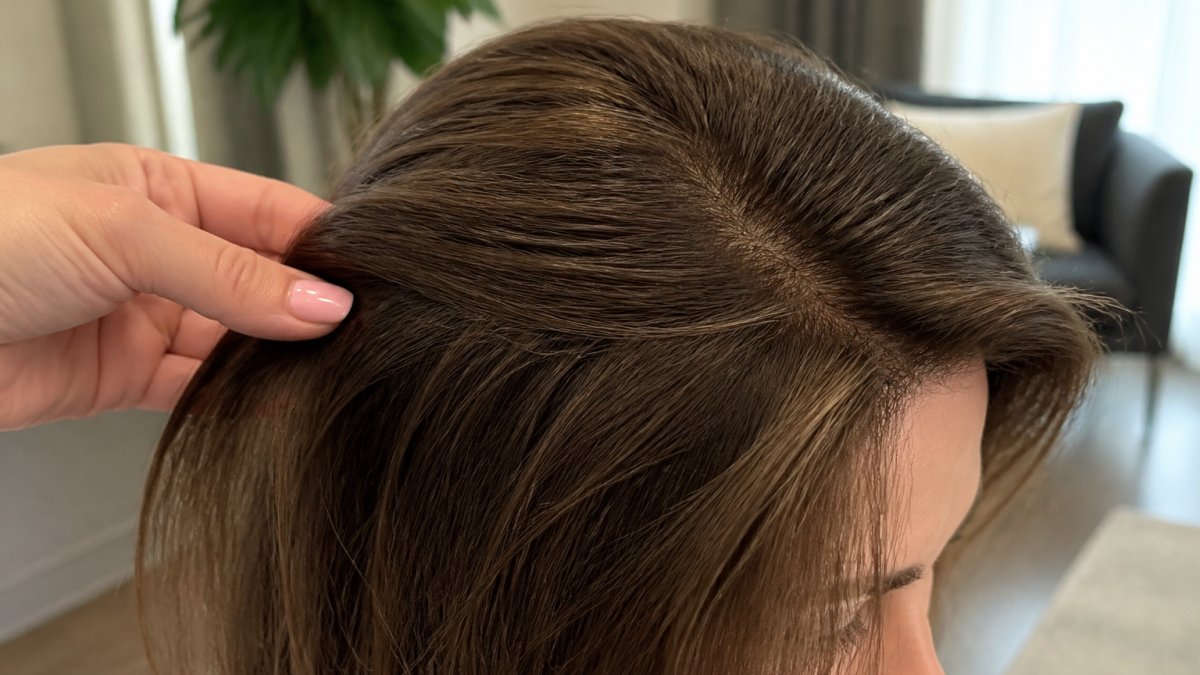
The choice between mesh and meshless depends on your hair density, scalp sensitivity, and how much maintenance you're willing to do. Mesh systems tend to be more secure for lower-density hair.
Both approaches require regular maintenance. You'll need touch-ups as your natural hair grows. The integration points need to stay secure. Your scalp needs to stay healthy.
What integration gives you is density that feels like your own hair. When it's done right, people won't know you're wearing anything. Your part looks full. Your crown has volume. Your edges have coverage.
Hair Extensions for Thinning Hair: Assessment and Placement
Hair extensions add length and density to your existing hair. But here's where most guides get this wrong: extensions aren't a one-size-fits-all solution. The method, placement, and weight all depend on what your natural hair can safely carry.
When I assess a client for extensions, I'm evaluating several things:
- Hair density. How much natural hair do you have? Thin, fine hair can't support heavy extensions. I'd recommend lighter methods or fewer extensions placed strategically.
- Hair strength. Is your hair fragile or prone to breakage? Some extension methods create tension that can damage delicate strands.
- Placement needs. Do you want length throughout, or just in certain areas? Strategic placement can create the illusion of fullness without overloading your natural hair.
- Lifestyle. How much maintenance can you realistically commit to? Some methods require frequent salon visits. Others you can maintain at home.
- Hair integrity. This is non-negotiable. The method should enhance your hair, not compromise it.
I work with several extension methods depending on your assessment. K-tip extensions use keratin bonds and work well for clients with adequate density. Weft extensions add width and can be placed to target specific areas. Tape-in extensions distribute weight across a wider base, making them gentler on fine or fragile hair.
The placement strategy matters as much as the method. If you're adding extensions throughout your hair, the weight distributes differently than if you're placing them only in your crown or underneath for hidden density. I design placement around what your natural hair can support.
A common mistake is asking for maximum length and maximum density all at once. That's often impossible without damaging your natural hair. The realistic approach is prioritizing what matters most to you, length, fullness, coverage, and building the plan around that.
What to Ask During a Hair Loss Consultation Questions
A good consultation should feel like a conversation, not a sales pitch. You're evaluating whether the approach fits your needs. I'm assessing your hair and understanding your goals. Both matter.
Here are the questions you should ask:
About your hair assessment:
- "What's your honest evaluation of my hair's density and strength?"
- "What can my hair safely carry without risk of damage?"
- "Are there any concerns about my hair's current condition?"
About the method:
- "Why are you recommending this specific method for my hair?"
- "What are the realistic limitations of this approach for me?"
- "How often will I need maintenance, and what does that involve?"
About results:
- "What should I realistically expect this to look like?"
- "How long will results last before I need touch-ups?"
- "What happens if I'm not happy with the result?"
About your experience:
- "How long have you been doing this work?"
- "Have you worked with hair situations like mine before?"
- "Can you show me examples of your work on similar hair types?"
During your consultation at Conceited Beauty Bar in Lancaster, I'll walk through your hair's specific context. I'll explain why I'm recommending a particular method. I'll be honest about what's realistic for your hair and what isn't. If you're not a good candidate for a method you want, I'll tell you that directly, because your hair's integrity matters more than the sale.
A consultation should answer your questions, not create pressure. You should leave understanding exactly what to expect and why a particular approach makes sense for your situation.
Preparing for Your Non-Surgical Restoration Journey
Before you start any restoration method, you need a clear plan. That plan includes understanding what you're committing to, preparing your hair, and setting expectations that match reality.
Assess your hair honestly. Not with hope or wishful thinking, but with clear eyes. What's your actual density? What's your hair's actual condition? Are there any scalp concerns? If you're unsure, a consultation with a specialist can help you see what you might be missing.
Understand the maintenance. Every method requires upkeep. Extensions need touch-ups as your hair grows. Toppers need washing and styling. Integration systems need regular checks. Know what that looks like for the method you're considering. Can you commit to that schedule? Does it fit your life?
Choose a method that fits your hair, not the other way around. This is the core principle. Your natural hair's strength, density, and texture should determine the method, not your preference for a particular look.
Start with realistic expectations. Non-surgical restoration adds coverage, density, and length. It doesn't create hair that doesn't exist. It doesn't fix medical conditions. It creates a cosmetic enhancement that works with what you have.
Plan for the long term. Restoration isn't a one-time fix. Your natural hair grows. Your density changes. Your needs shift. The methods that work for you now might need adjustment in six months or a year. Build a plan with flexibility.
Maintaining Your Results and Setting Realistic Expectations
The work doesn't end once your restoration is in place. Maintenance keeps it looking natural and protects your hair.
Wash and condition regularly. How often depends on your method and lifestyle. Most extensions and toppers need washing every 7-10 days. Your natural hair at the base might need washing more frequently.
Schedule touch-ups on time. As your natural hair grows, the integration points or tape bases need adjustment. Toppers might need repositioning. Skipping touch-ups creates visible gaps and can eventually damage your natural hair.
Protect your hair during daily life. Sleep on a silk pillowcase to reduce friction. Avoid excessive heat styling. Be gentle when brushing, especially around integration points.
Monitor your scalp health. If you notice itching, redness, or flaking, address it immediately. Integration systems and toppers sit close to your scalp.
Adjust expectations as your hair changes. Your natural density might shift. Your hair texture might change. Your lifestyle might look different.
The realistic expectation is this: non-surgical restoration requires ongoing commitment. It's not a permanent solution. It's not a cure for hair loss.
Women who thrive with restoration are the ones who see it clearly: as a tool that adds coverage and confidence when their hair changes.
When you're ready to explore what's possible for your specific hair and situation, I'd welcome a consultation. At Conceited Beauty Bar in Lancaster, I work through a personalized assessment process.
Frequently Asked Questions
What is the difference between hair toppers and hair integration systems?
Hair toppers sit on top of your existing hair and are designed for coverage in specific areas like the crown or part line. Hair integration systems work by blending with your natural hair throughout, creating a more cohesive look. Integration systems require assessment of your natural hair's density and ability to support the added weight. The right choice depends on your hair condition, lifestyle, and the specific areas you want to address.
Can hair extensions work with thinning hair, and how do I know if my hair can safely support them?
Hair extensions for thinning hair require careful assessment. During a consultation, I evaluate your hair's density, strength, and what it can safely carry without added stress. Fine or fragile hair may need lighter methods or strategic placement. The method should be fitted to your natural hair, not the other way around. Not every client is a candidate for extensions, and that's an honest conversation I have upfront.
What should I prepare before my hair restoration consultation?
Come with realistic expectations about what coverage and density are achievable for your hair type and lifestyle. Bring photos of styles you like, information about any hair changes you've noticed, and details about your daily routine and maintenance comfort level. Be honest about your budget and how much time you can dedicate to upkeep. This helps me create a plan that actually works for your life, not just in theory.
How long does non-surgical hair restoration last, and what maintenance does it require?
Longevity depends on the method. Maintenance includes gentle washing, conditioning, and sometimes repositioning. I discuss the realistic maintenance schedule during your consultation so you can decide if it fits your lifestyle.
The path forward starts with understanding your hair's actual needs, not your hopes for what it could be. A good restoration plan respects your hair's integrity, fits your lifestyle, and sets expectations you can actually meet. That's how you get results that feel authentic and sustainable over time.